
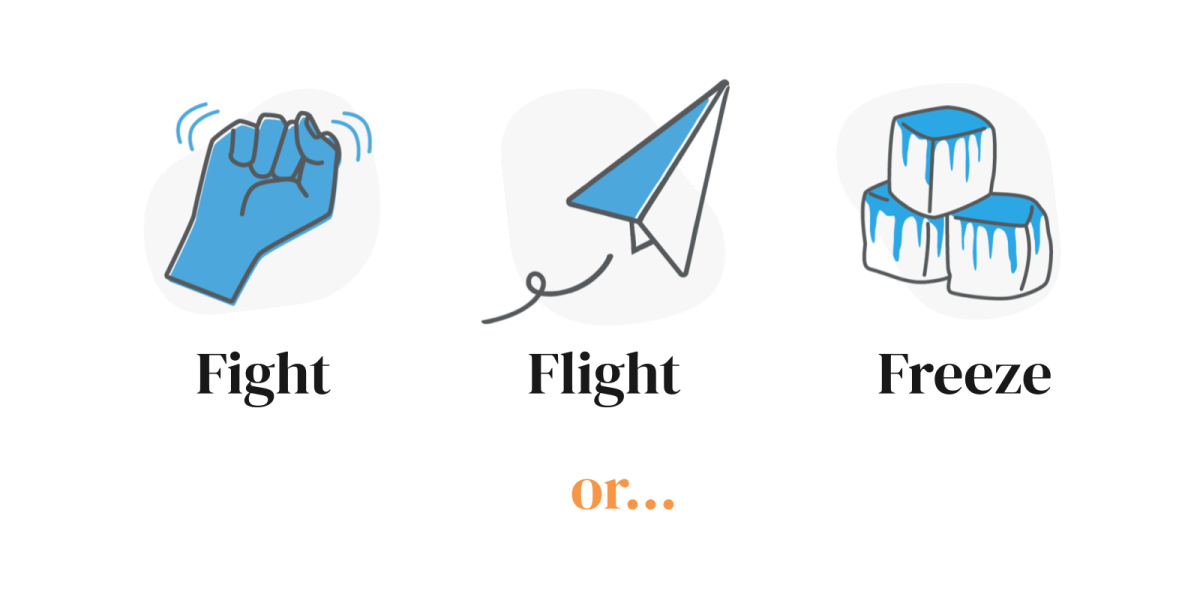
Fight, Flight, Freeze…
or Get Creative?
What your nervous system has to do with problem-solving—and a 5-minute exercise you can try today
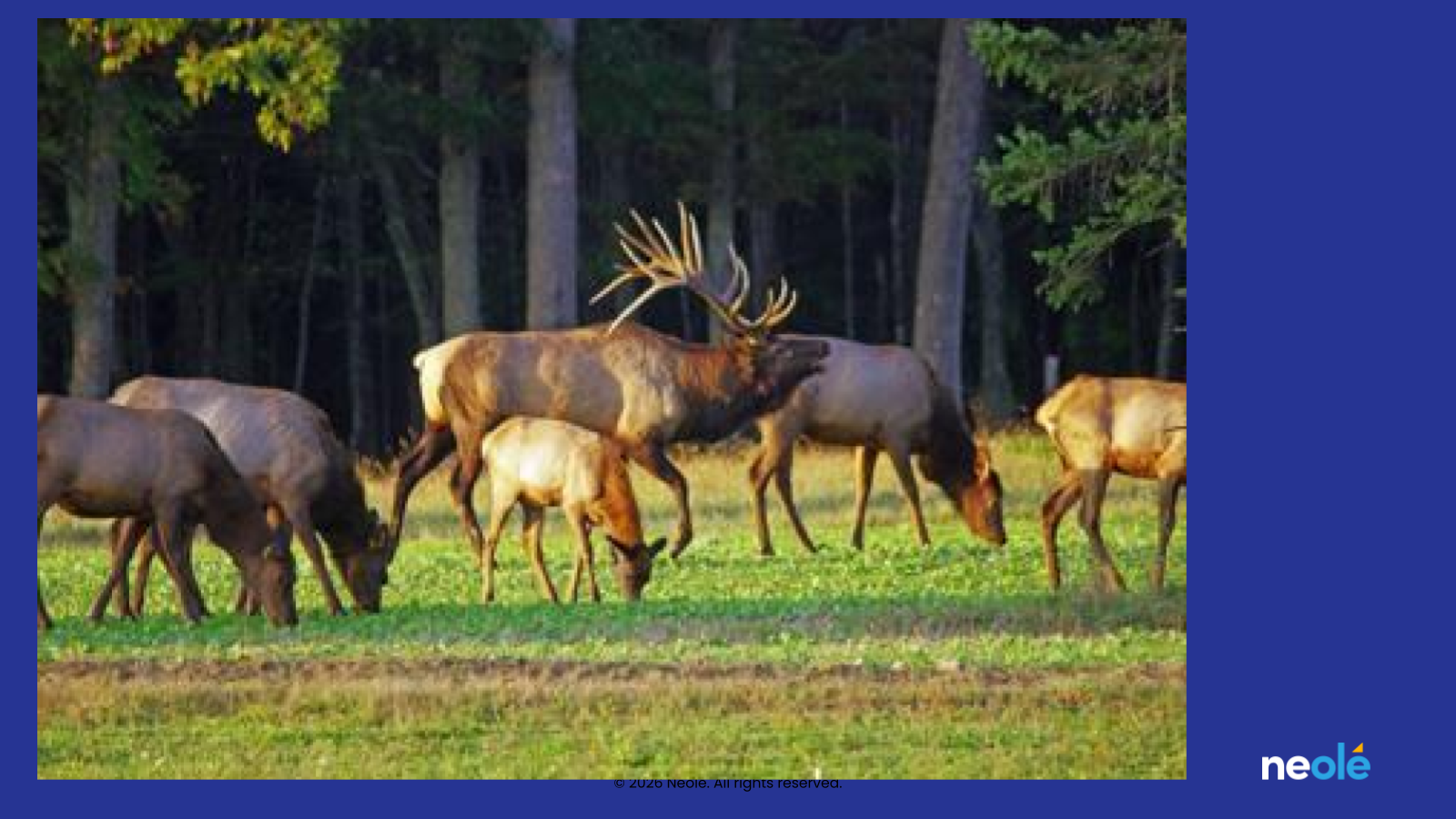
Imagine you’re an elk.
You’re grazing on grass, completely relaxed, and suddenly you sense danger.
A pack of wolves comes out of the forest. You run for your life.
After a couple of minutes of running, one of the elk in the herd is taken down. You keep running for another thirty seconds or so, and then… you go right back to grazing on grass.
Wouldn’t it be nice if we humans could handle stress in the same way?
The difference between animals and humans is that we have the capacity to reflect on the past, plan for the future, and evaluate options. And so we get stuck in a lot of thinking. That thinking can keep us in a state of chronic stress.
The elk lives in the moment. Danger happens, danger passes, back to grazing. If you have a dog, you’ve probably seen them shake things off after a stressful moment. We don’t. The tension stays in our bodies—sometimes for days, sometimes for years.
When we face a challenge or an unexpected change, most of us gravitate to one of three responses: fight, flight, or freeze. But we can’t always physically fight. We can’t actually run away. And so these responses show up differently in our professional lives.
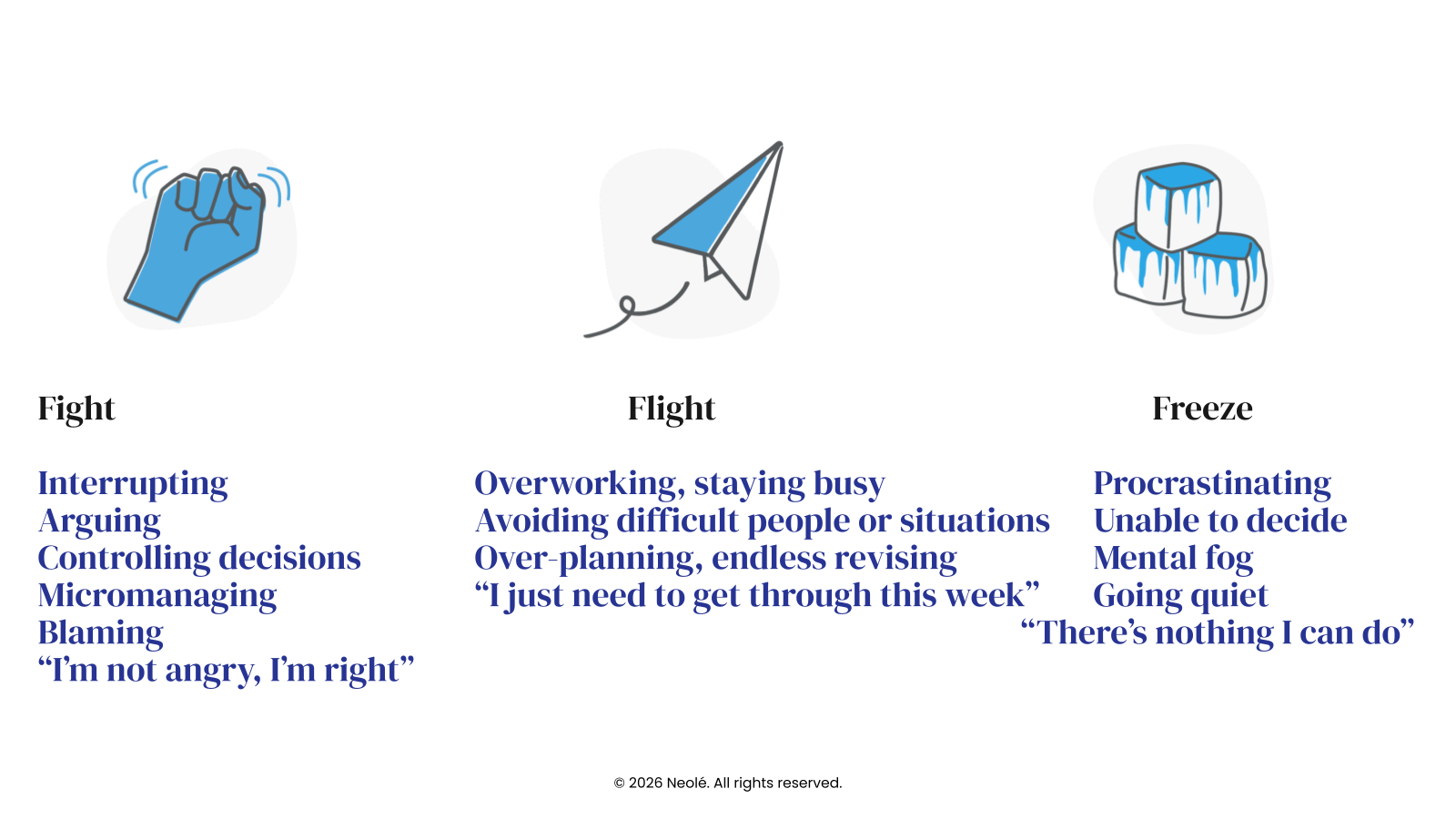
Fight looks like an urge to interrupt, to get into arguments, to control decisions, to micromanage, to blame.
“I’m not angry. I’m right.”
Flight shows up as overworking, keeping yourself constantly busy, avoiding difficult people or conversations, over-planning, endless revising, perfectionism.
“I just need to get through this week.”
Freeze looks like procrastination, an inability to make decisions, mental fog, going quiet.
“There’s nothing I can do.”
These are not character flaws. They’re normal human responses to stress. The problem is that we get into the habit of being stuck in one of these states.
But here’s what’s interesting: humans have a fourth response. We have the ability to get creative.
Creative resilience is the ability to generate new solutions and adapt to challenges in a dynamic and resourceful way. It involves using creative thinking to overcome obstacles, bounce back from setbacks, and find real opportunities in situations that initially feel impossible.
The most important part of that definition? It’s an ability. A HUMAN ability. We are all born with it.
Whether you use it regularly or not depends on you. The more you access it, the stronger it gets. The less you access it, the harder it becomes. But it’s always there.
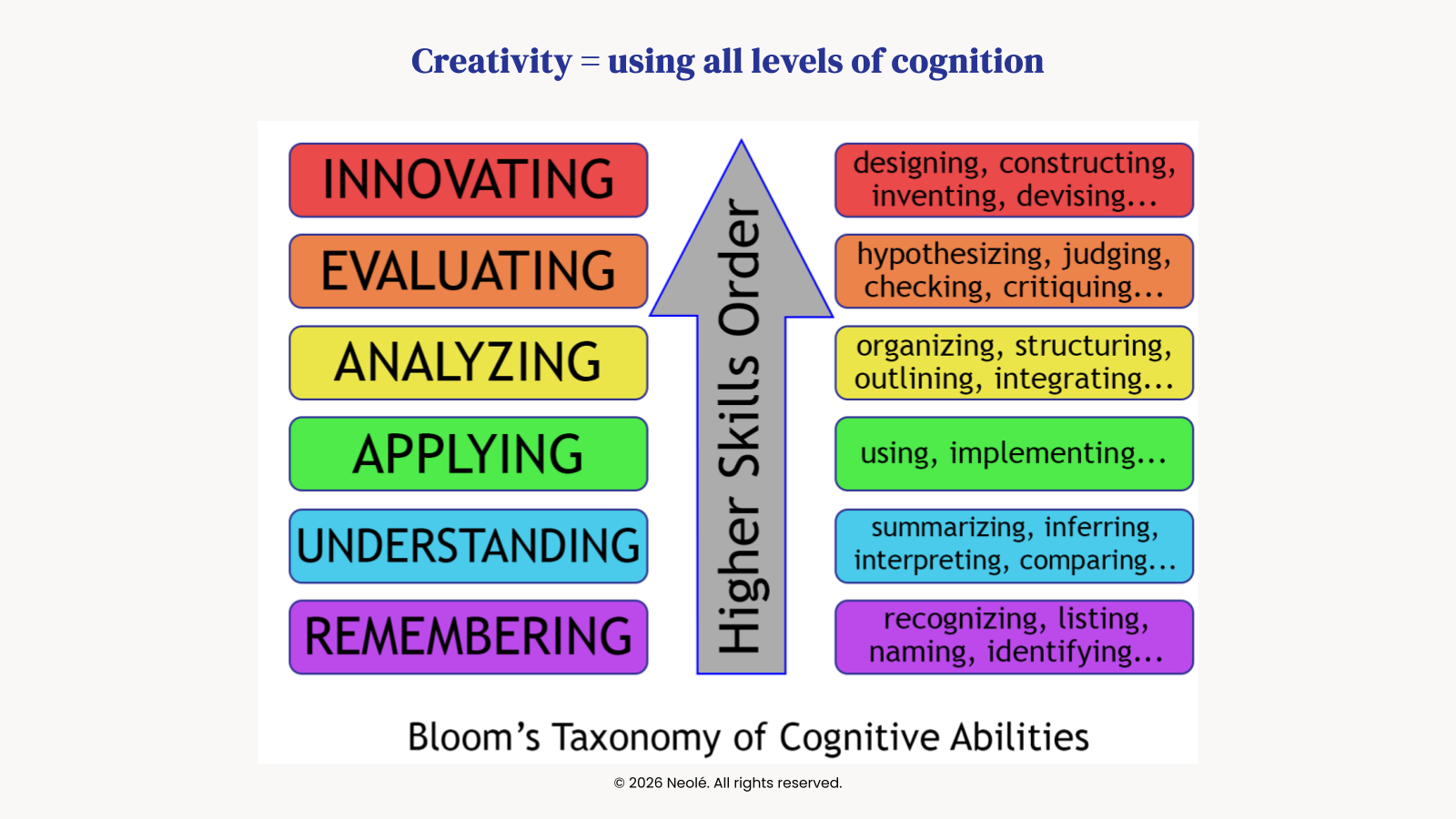
And here’s something that surprises a lot of people: creativity is actually the highest cognitive skill we have as humans. Above remembering, understanding, applying, analyzing, and evaluating. The ability to get creative sits at the very top.
Think about what happens in most meetings. Someone says, “I know! We could try this.” And right away, someone else jumps in with, “Oh no, that will never work.” They’re analyzing and evaluating. But that’s not their full level of intelligence.
“That didn’t work in the past. But HOW MIGHT WE make it work this time?”
That requires creative thinking. That’s a higher order of cognition than critical thinking.
Imagine a glass jar with the bottom facing a bright window. You put 10 flies and 10 bees inside. Within ten seconds, all the bees have gone to the bottom of the jar, and all the flies have gotten out.
Why? The bees have knowledge. They know from past experience that the light is usually where the exit is. So they fly towards the light and get trapped.
The flies don’t hold on to knowledge. They just fly in every direction, hitting their wings a million times until they find a way out.
My invitation is to be a mix of the flies and the bees. Knowledge is valuable. But if all we do is make decisions based on past knowledge, we get stuck at the bottom of the jar. We need that ability to experiment, to take risks, to try things that haven’t been done before.
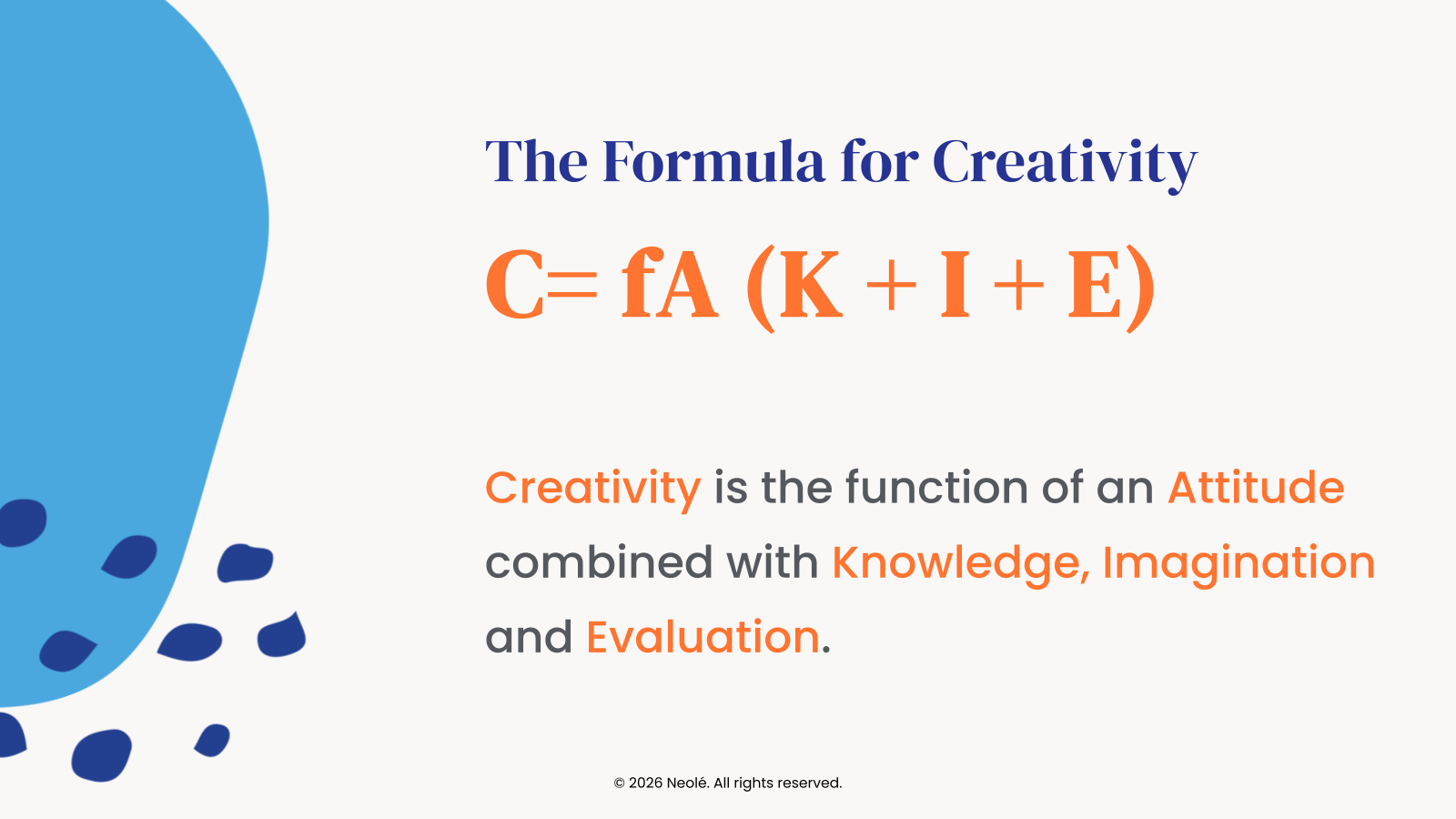
There’s actually a formula for creativity: it’s a function of attitude combined with knowledge, imagination, and evaluation skills. The attitude is curiosity, courage, and the willingness to experiment. Without it, you’ll always default to what’s comfortable and familiar—even if it’s no longer working.
Not every challenge requires creative thinking. Sometimes there’s already a step-by-step solution, and you just need to put in the time. So how do you know when to tap into your creative resilience?
I use a tool called the Three I’s, explained by Tim Hurson in his book “Think Better.” Go through any wish or challenge and ask:
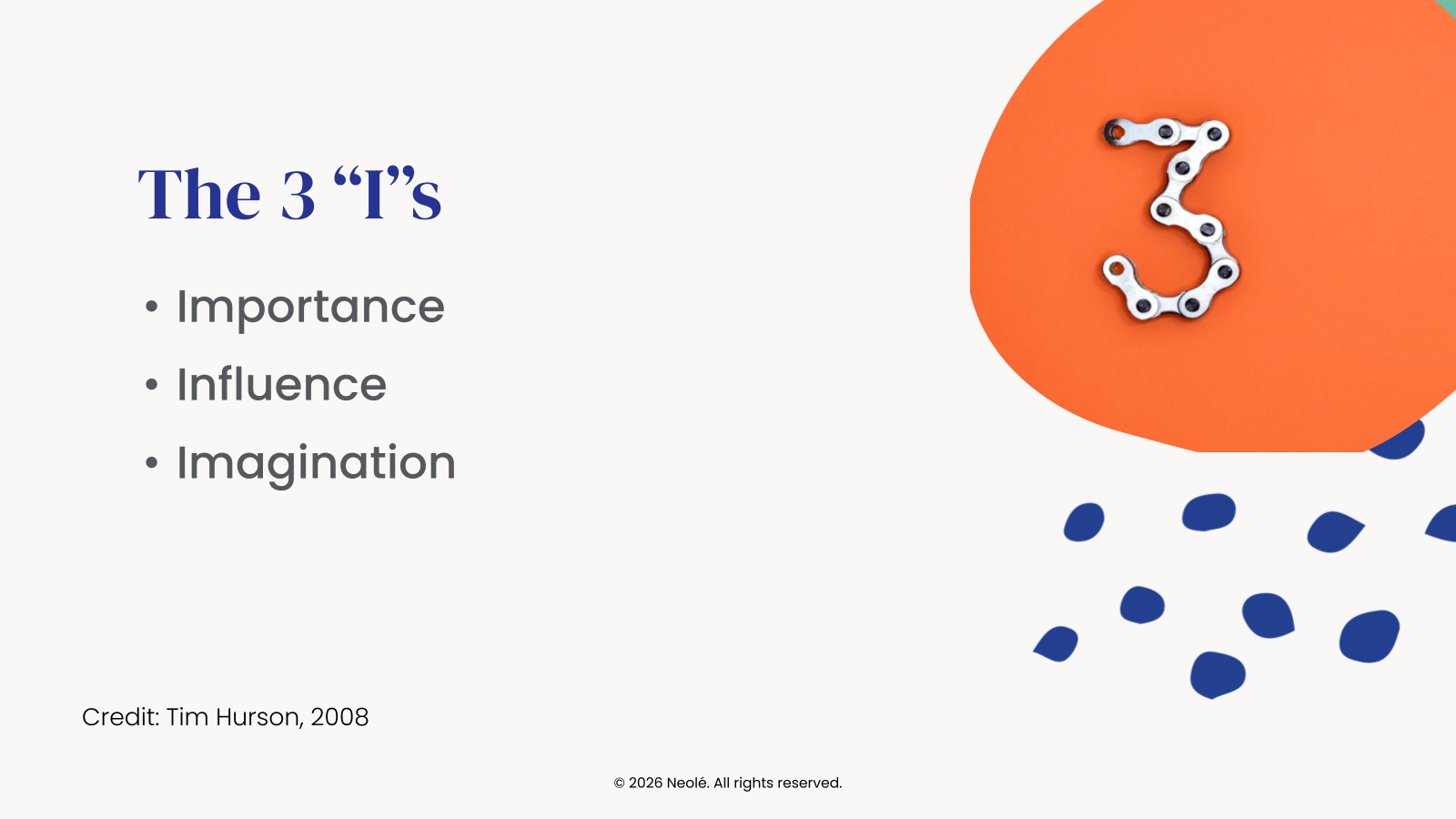
Importance: Is this actually important to YOU? Not to your boss, your partner, or society. To you. If it’s not genuinely important, don’t pour creative energy into it.
Influence: Do you have the ability to do something about this? Can you act on it, or would you need to team up with someone who can? If you have no influence at all, either find people who do or let it go. Don’t stress yourself over something you can’t affect.
Imagination: Does this challenge require imagination, or is there already a known solution? If your car has a flat tire, there’s a process for that. But if the challenge is complex, involves a lot of moving pieces, and you haven’t been able to solve it yet? That requires imagination.
If a challenge gets all three check marks, THAT is where your creative thinking makes the biggest difference. Go for it.
If it’s important and requires imagination but you have no influence? Team up or let it go. If it’s important and you have influence but it doesn’t require imagination? Just find the existing solution and dedicate time to it. Simple.
Here’s where it all connects. Your ability to access creative thinking depends on the state of your nervous system. This is based on polyvagal theory, which explains that we have three main nervous system states.
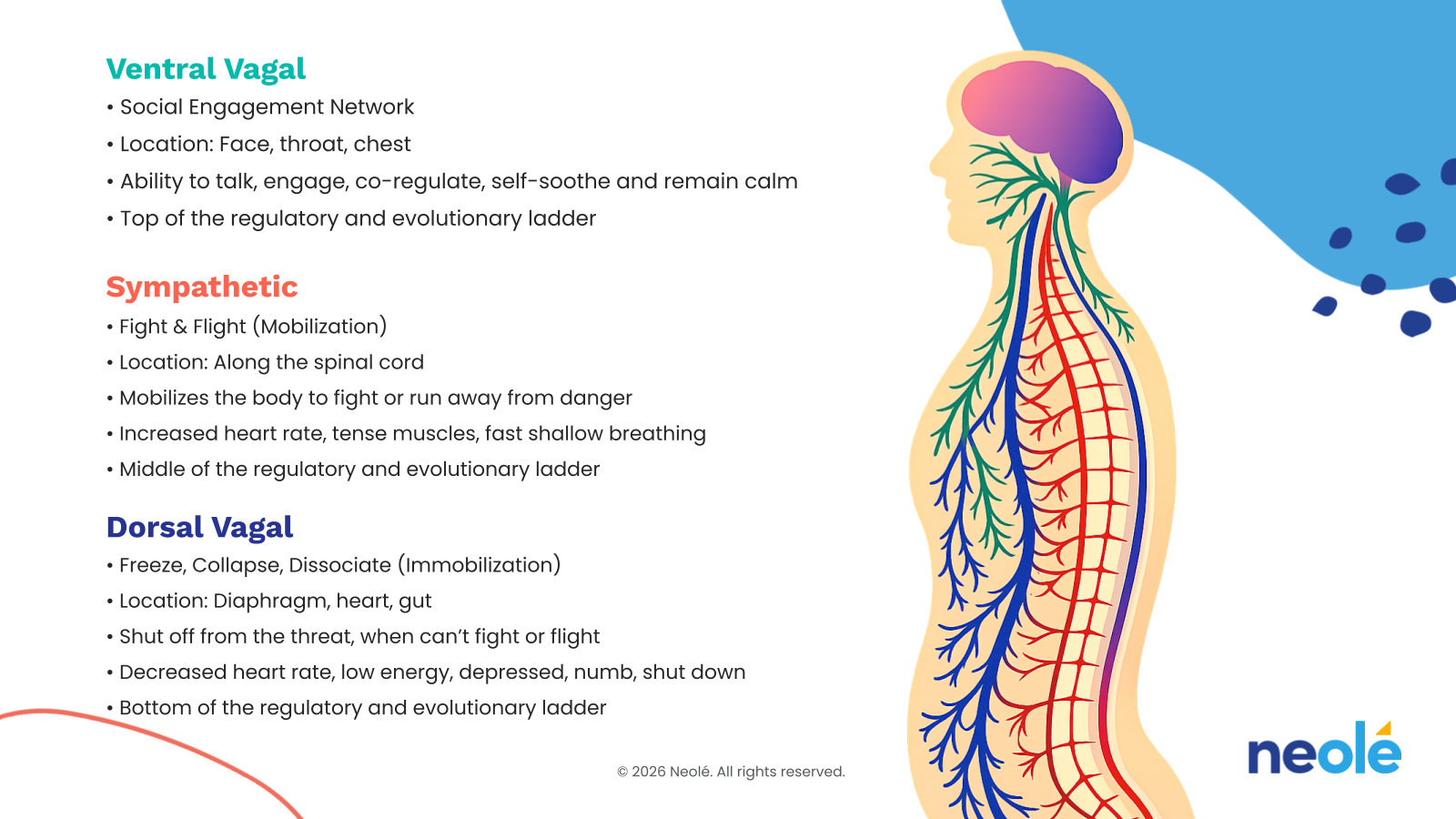
Ventral vagal is the state where your social engagement system is active. You feel connected to others, you can collaborate, you can self-soothe, you can remain calm. This is where you’re most able to tap into curiosity, courage, and creative thinking.
This is where creative resilience lives.
Sympathetic is the fight-or-flight state. Your heart rate increases, your muscles tense, your breathing becomes shallow. You’re mobilized for action—but not the creative kind.
Dorsal vagal is the freeze state. Collapse, disengagement, feeling like there’s nothing to be done. A lot of people in professional settings experience a functional freeze—they go through the motions, get the work done, but they’re not engaged. Not connecting. Not solving new problems.
You CANNOT access creative thinking when your nervous system is stuck in sympathetic or dorsal vagal.
It doesn’t matter how smart you are, how much knowledge you have, or how many brainstorming sessions you sit through. If your nervous system is in a protective state, your brain is focused on survival, not innovation.
And so the question becomes: how do we consciously move our nervous system into that ventral vagal state where we can actually use our creative abilities?
There’s a science-based exercise called Supportive Presence that helps regulate your nervous system. I guided a group of professionals through it in a recent workshop, and one participant said that five minutes reduced their anxiety for the rest of the day.
Another said it made them sleepy—a sign their nervous system was finally getting a chance to rest after prolonged stress.
You’ll need five uninterrupted minutes.
Close your eyes or look down at the ground. Scan your body. Notice any aches, tension, warmth, chills, tightness. You’re not trying to fix anything. Just name what you notice. “I feel tension in my shoulders. I see you.” “There’s tightness in my stomach. I notice you.” No judgment. Just noticing.
Shift your attention to your emotions. Maybe there’s a little sadness, some anxiety, a sense of calm, a flicker of frustration. Feelings can change every few seconds. Just name them as they come. “I see you, worry.” “I notice you, gratitude.” Again, no judgment.
Notice what thoughts are passing through your mind. Are they about the future? The past? About other people? Don’t get sucked into any one thought. Just notice it and let the next one come. “There’s a thought about my to-do list.” “There’s a thought about that conversation yesterday.”
That’s it. Five minutes of noticing without judging. When you practice this daily, you’re building a neural pathway that allows you to step out of the default mode network—the part of your brain that gets stuck in repetitive thinking—and into the present moment.
The key insight: when you most need this exercise is when you least want to do it.
That’s why the daily practice matters. You’re building the skill when things are calm so it’s available when things are not.
Here’s one more tool from the workshop that you can start using immediately.
When you’re faced with a challenge, your brain tends to get stuck in the problem. “I wish I had more energy.” “I wish we had a budget.” “I wish my team communicated better.” You stay in the wish, and the wish stays a wish.
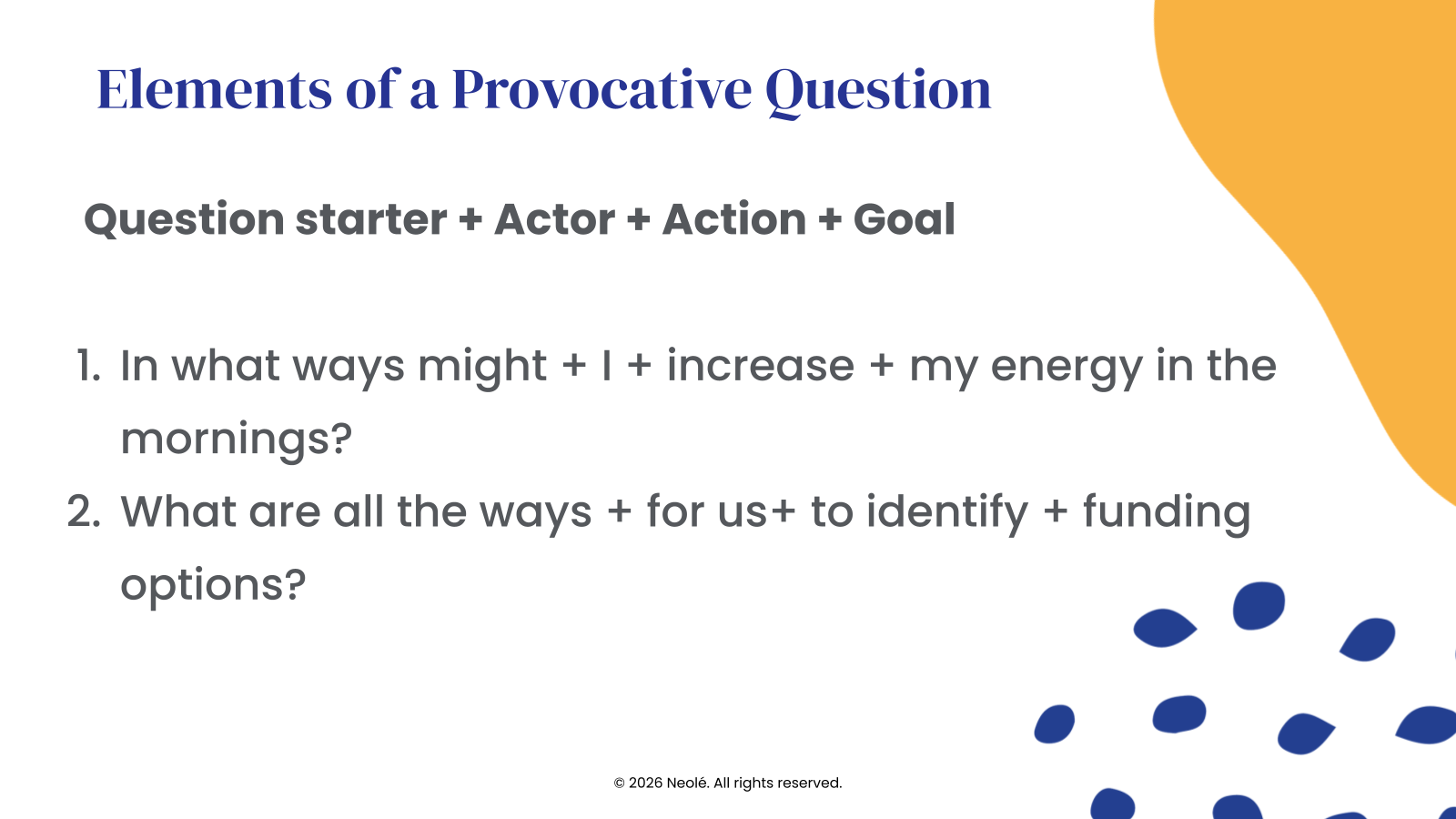
But if you rephrase that wish as an open-ended question, something shifts. Your brain starts looking for answers instead of dwelling on the problem.
How to + [actor] + [action] + [goal]
“I wish I had more energy” becomes
“In what ways might I increase my energy in the afternoons?”
“I wish we had a budget” becomes
“What are all the ways for us to identify funding options for this project?”
Once you have a provocative question, go deeper. Ask yourself: Why is this important to me? (This reveals the bigger wish behind the wish.) And: What’s stopping me? (This uncovers the real obstacles.)
Turn every answer into another provocative question. The more questions you generate, the more likely you are to land on the one that actually opens things up.
If you take one thing from this article, let it be this: creative resilience is not something you either have or don’t. It’s a practice. The more you exercise it in small ways—what researchers call “mini-c creativity,” the playful, experimental, no-pressure kind—the more available it becomes when you face real challenges.
And the foundation of that practice is your nervous system. If your body is stuck in fight, flight, or freeze, your brain will stay stuck too. Taking care of your nervous system—by learning to self-regulate—IS taking care of your creative ability.
So try the five-minute exercise. Rephrase one of your current challenges as a provocative question. Notice when you’re shooting down ideas in meetings and instead ask, “How might we make this work?”
Those small shifts? That’s creative resilience in action.
Ginny Santos is the founder of Neolé, where she works with teams and leaders to develop creative thinking skills and build sustainable, engaged workplaces. She holds a Master’s in Creative Thinking and Innovation and is a certified NeuroPerformance coach. To receive stories, practical tips, and free resources, join her newsletter.