
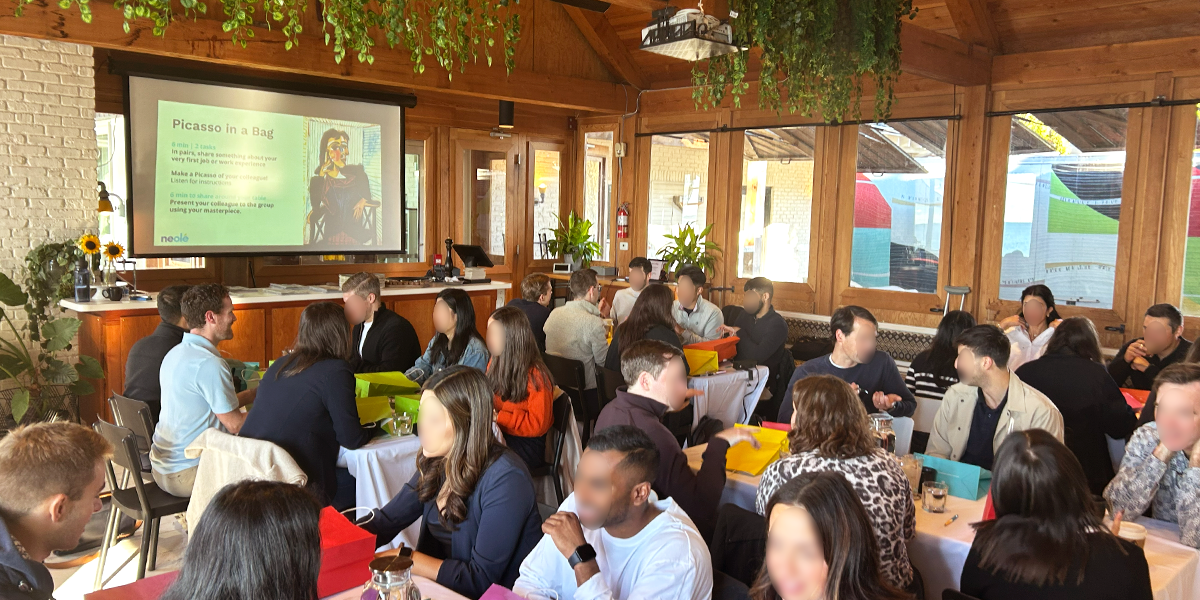
Your team just got back from an offsite. There were icebreakers. Someone made a joke about trust falls. The venue was nice, the food was decent, a few people called it “refreshing.” And then Monday came. Everyone went straight back to the same patterns, the same stress and tensions, the same unspoken frustrations. Within two weeks, it was like the retreat never happened.
If this sounds familiar, you’re not alone. I’ve been facilitating team retreats for over 25 years now, and this is the story I hear most often when organizations call me. They’ve already tried a retreat. Sometimes two or three. And they’re wondering why nothing stuck.
The answer is almost always the same: the retreat was designed for fun, not for change.
Fun matters. Connection matters. But if a retreat doesn’t address the actual dynamics holding a team back, you get a nice day out and nothing different on Monday. That’s a missed opportunity, especially when you consider what a well-designed retreat can actually do for a team.
So let’s talk about how to design one that works.
When your team actually needs a retreat (and when you don’t)
Not every team problem needs a retreat. Sometimes a good meeting is enough. Sometimes what you really need is a difficult conversation between two people, not a full-day event.
But there are specific situations where a retreat is the right tool:
Your team has new members and hasn’t rebuilt trust yet. After a restructuring, a merger, or a wave of turnover, the team on paper isn’t the same team in practice. People are polite with each other, but the real collaboration hasn’t kicked in yet.
You’re heading into a strategy shift and need genuine alignment. Not “everyone nods in the meeting” alignment. Real alignment, where people understand the direction, believe in it, and know their role in making it happen.
Conflict is brewing under the surface. People are talking about each other instead of to each other. Meetings feel tense or artificially polite. Someone described the energy to me once as “everyone being professionally nice while secretly frustrated.” That’s a sign.
Energy is flat and people are going through the motions. Your team is still delivering, but the spark is gone. Ideas dried up. People show up, do their work, and log off. Nobody is actively unhappy, but nobody is excited either.
The team works remotely or in a hybrid setup. When most of your interactions happen over video calls, you lose the informal moments that build trust. A retreat creates the physical (or intentional virtual) space for the kind of connection that Zoom can’t replicate.
Here’s the difference between a retreat, a workshop, and a meeting. A meeting solves a specific problem. A workshop teaches a specific skill. A retreat creates space for the team to step back, see the bigger picture, and rebuild how they work together. They’re different tools. If you’re trying to fix a systemic issue with a 60-minute meeting agenda, it won’t work. And if you’re running a retreat like a long meeting, you’ll waste everyone’s time.
Team retreat, leadership offsite, or a whole-company day?
The same design principles apply whether you’re bringing together a single team, your leadership group, or the whole organization. But the purpose shifts depending on who is in the room, and so does the value.
The team retreat
This is for an intact team that works together day to day. The focus is on how this specific group collaborates, communicates, and delivers together, and on clearing whatever has been getting in the way.
The leadership retreat or leadership offsite
This is for the people who set direction for everyone else. A leadership offsite is where your executive or management team steps out of the daily firefighting to align on strategy, make the decisions that have been stuck, and work through the tensions that leaders rarely have space to address. It is often the highest-leverage day a company can invest in, because when the leadership team is genuinely aligned and working well together, every team below them feels it. And when they are not, every team feels that too.
The whole-company day
For smaller organizations, roughly 50 to 300 people, bringing everyone together for a day can be one of the most powerful things you do all year. It connects people across departments that rarely interact, gives everyone a shared sense of direction, and builds the relationships that make cross-team collaboration possible. At this size you are still small enough that one well-designed day can genuinely shift the culture, and big enough that people do not otherwise get many chances to connect across the whole organization.
Identifying the primary purpose for your retreat
Once you know who the retreat is for, get clear on what it’s primarily for. Most retreats blend a couple of these, but naming the main purpose keeps the design focused and stops you from trying to do everything in a single day.
Alignment
For when you need everyone rowing in the same direction: new priorities, a new strategy, a pivot. The goal is shared understanding and genuine buy-in, not just a message cascaded from the top.
Connection and collaboration
For when collaboration is the bottleneck, whether that’s within a single team that feels fragmented or newly assembled, or across departments that have drifted into silos. Many of the retreats I’m asked to design are about exactly this: helping a team work better together internally, and helping different departments understand each other so they can collaborate across the whole organization instead of staying in their own lanes. The goal is to rebuild the relationships and trust that make everyday collaboration faster and easier. This is often the most valuable focus of all for teams who work remotely, across time zones, or in hybrid arrangements.
Innovation
For when you need fresh thinking: new ideas, a new offering, or a way through a stubborn problem. The goal is to break default patterns and reach possibilities the team can’t get to in the daily grind.
Reset
For when something has shifted (a restructuring, a merger, a hard year, a change in leadership) and the team needs to figure out who they are now. The goal is to make sense of what happened and rebuild a shared direction.
Five questions to answer before you plan
A quick gut-check. If you can answer these clearly, you’re ready to design a retreat that lands:
1. What specifically needs to be different after this retreat? If you can’t name it, you’re not ready to select a facilitator.
2. Who is this retreat for, and what is its primary purpose?
3. What’s the honest conversation nobody’s having yet?
4. Who needs to be in the room for the outcomes to stick?
5. How will you hold the momentum in the weeks after everyone is back to work?
If you need to think out loud before you can answer these questions, and would benefit from being asked some thought-provoking questions that will help you figure out your next steps, book a free consult with us. We are always happy to help you think through these questions before you go too deep into the planning process.
The anatomy of a retreat that actually works
In over 25 years of facilitating retreats across every kind of organization (corporate, nonprofit, government, startups), I’ve found that the ones that create lasting change share a few things in common. And the ones that don’t almost always skip these same steps.
Pre-work: Understanding the real issues before the day
This is where most retreats go wrong before they even start. Someone books a venue, picks a date, and starts building an agenda based on assumptions about what the team needs.
Good retreat design starts with listening. That means stakeholder interviews, surveys, or one-on-one conversations before the retreat is even designed. You want to understand:
What’s actually going on in the team (not what leadership thinks is going on)
Where the friction points are
What people are afraid to say out loud in a group setting
What success would look like for different people on the team
This pre-work shapes everything. I’ve had retreats where the leader told me the team needed better communication, but the interviews revealed the real issue was a lack of role clarity. If I had designed the retreat based on the leader’s assumption, we would have spent a full day on the wrong problem.
Design principles that create real engagement
A good retreat balances structure with flexibility. You need enough structure that people feel safe and the time is purposeful. But you also need room for the unexpected, because the most important moments in a retreat are rarely the ones you planned.
Here are the design principles I come back to every time:
Alternate between dialogue, reflection, and activity. Sitting and talking for eight hours is exhausting for everyone. Mix it up. Give people time to think on their own, then share in pairs, then bring it to the group. Move around the room. Use visual exercises. Get people out of their heads and into their hands.
Build toward commitment, not just conversation. Every section of the retreat should move the group closer to decisions and agreements. Conversation is the tool, not the goal. If people leave saying “that was a great discussion” but can’t name what they committed to, the design missed the mark.
Create safety for honest conversation early. The first 30 minutes set the tone for the entire day. If the opening activity feels shallow or forced (generic icebreakers, anyone?), people will stay guarded. If the opening creates genuine connection and signals that this is going to be a different kind of conversation, people lean in. I always design the opening activity to be meaningful, not just fun. Something that is easy, fun, AND meaningful, without putting anyone on the spot.
Timing matters more than you think
Half-day retreats work for a team that’s mostly aligned and needs to make decisions together. You can accomplish a lot in four focused hours, but you’re not going to rebuild trust or address deep conflict.
Full-day retreats are the sweet spot for most teams. You have enough time to go deep, work through tension, build shared understanding, and leave with real commitments.
Multi-day retreats are for teams going through significant transitions (new leadership, major restructuring, merger integration) or teams that are geographically distributed and rarely get face time. The first day breaks down walls. The second day builds something new.
Why an external facilitator makes the difference
Here’s something I tell every leader who’s thinking about running their own retreat: you should be in the room as a participant, not as the person running the show.
When the leader facilitates, two things happen. First, the leader is so busy managing the agenda that they can’t be present in the conversation. They miss the subtle dynamics. They don’t get to listen deeply because they’re worried about the next activity.
Second, and this is the bigger issue, the team holds back. Even in the healthiest teams, there’s a power dynamic. When the boss is running the session, people filter what they say. They tell the leader what they think the leader wants to hear. The honest stuff stays hidden.
An external facilitator changes that dynamic. The leader gets to participate as a team member. The facilitator manages the process, reads the room, adjusts in real time, and creates space for collaboration and breakthrough thinking that wouldn’t happen otherwise. The facilitator has no agenda other than helping the team get to where it needs to go.
I’ve facilitated retreats where the most important moment was a quiet comment from someone who’d never spoken up before, someone who finally felt safe enough to say what everyone was thinking. That moment doesn’t happen when the leader is running the whiteboard.
Facilitation techniques that create real engagement
Moving beyond icebreakers
I need to say something about icebreakers: most of them are terrible. “Tell us a fun fact about yourself” doesn’t create connection. It creates anxiety while people try to think of something interesting enough to share.
Good opening activities do three things: they lower the barrier to participation, they create genuine trust towards each other, and they signal that this day is going to be different from a regular meeting. I use opening activities that are quick, active, and get people talking about something they actually care about.
Structured dialogue for difficult conversations
When a team needs to address conflict, you can’t just say “let’s talk about it.” People freeze. Defensiveness kicks in. The conversation either stays superficial or blows up.
Structured dialogue techniques create a container where difficult things can be said safely. Things like rounds (where everyone speaks in turn and no one interrupts), paired interviews (where you listen deeply to one person before sharing your own perspective), and “What I need from this team” exercises that make requests explicit instead of keeping them buried.
The goal isn’t to eliminate conflict. Healthy teams have conflict. The goal is to make it productive instead of toxic. When people learn to disagree openly, with respect, the team gets stronger.
Creative problem-solving methods
Some of the best retreat moments happen when you give a team a real problem to solve together and a method they’ve never used before. Techniques from design thinking, FourSight creativity assessments, or structured brainstorming methods break people out of their usual patterns.
When a team that’s been stuck in the same loop of meetings and status updates suddenly finds themselves building a prototype or mapping a customer journey on a wall of sticky notes, the energy in the room shifts. People who are quiet in meetings become animated. People who usually dominate learn to listen because the process distributes participation naturally.
Handling the dynamics in the room
Every team has them: the person who talks too much and the person who never talks at all. Good facilitation design handles this without calling anyone out. Pair work gives quiet people space to think and share before going to the full group. Timed rounds give everyone equal airtime. Physical activities (moving around the room, posting ideas on walls, voting with dots) let people contribute without having to speak up in front of 20 colleagues.
The goal is to hear from everyone, not just the loudest voices. Some of the best ideas in an organization live in the heads of people who don’t fight for airtime in meetings.
Virtual and hybrid retreat design
I get asked about this a lot: can you run a retreat virtually? The honest answer is yes, but it takes more intentional design, not less.
Virtual retreats work when they’re shorter (three to four hours maximum per session, often split across two half days), when they use breakout rooms thoughtfully so people aren’t staring at a grid of faces all day, and when the activities are designed specifically for the screen, not adapted from in-person exercises.
Hybrid retreats (some people in the room, some remote) are the hardest to get right. The people in the room always have a better experience unless you design specifically to equalize participation. That means giving remote participants dedicated facilitator attention, using chat and digital whiteboards for real-time input, and sometimes having everyone join from their own screen even when some people are in the same building. Both virtual and hybrid retreats require very smart and thoughtful use of technology. Not every facilitator knows how to do that. We’ve been designing and facilitating team retreats long before the COVID pandemic. Our favourite facilitation tool for these types of retreats is Stormz combined with Zoom. Always happy to show you how it works if you want to know more.
After the retreat: making it stick
This is where the real work happens. And it’s where most retreats fail.
The 72-hour rule
I tell every team the same thing: what happens in the first 72 hours after the retreat determines whether anything actually changes. If people go back to their desks Monday morning and nothing is different (same meetings, same habits, same dynamics), the brain files the retreat as a nice memory and goes back to default mode.
In the first 72 hours:
Send out the commitments and agreements made during the retreat. Not as a polished report, but as a simple, actionable list that everyone can see.
Have the leader reference the retreat in the first team interaction back. “Remember what we agreed to about xyz? Let’s try it right now.” This signals that the retreat was the beginning, not a one-off.
Schedule the first check-in. Teams that schedule a 30-minute check-in for two weeks after the retreat are far more likely to follow through on their commitments than teams that don’t.
Follow-up structures that work
Team charters are one of the most effective retreat outputs. A charter is a shared agreement about how the team wants to work together: their primary goals, their shared values and what those actually look like in day-to-day interactions, how to have productive disagreements, give and receive feedback, and what they expect from each other. When the team creates this together during the retreat, it becomes a living document they can reference when things go sideways.
Action commitments should be specific, owned by individuals, and have deadlines. “We should communicate better” is not a commitment. “I will send a weekly update to the team every Friday by 4pm” is.
A check-in cadence keeps the momentum going. Monthly or quarterly check-ins where the team revisits their charter and commitments prevent the slow drift back to old patterns.
How to measure whether the retreat worked
You won’t see the results in a spreadsheet the next week. But you will notice them. Pay attention to:
Are people speaking up more in meetings?
Is the team making better decisions faster?
Has the interpersonal friction decreased?
Are people referring back to what they committed to during the retreat?
Is the energy in the room different?
A follow-up survey four to six weeks after the retreat gives you more structured data. Ask the team: what changed? What stuck? What slipped?
When to bring the facilitator back
Some teams do an annual retreat. Some do one after a major transition. Some bring a facilitator in quarterly for shorter sessions to keep the team’s connection strong. There’s no single right cadence, but I will say this: the teams that invest in regular time together (not just when things are in crisis) are the ones that handle pressure the best.
Frequently asked questions
How far in advance should we plan a team retreat?
For a well-designed retreat, plan at least four to eight weeks in advance. This gives time for pre-work (stakeholder interviews, surveys), venue booking, and thoughtful agenda design. Rushed retreats almost always skip the pre-work phase, which is the single biggest factor in whether the retreat creates lasting change. For multi-day retreats or teams with complex dynamics, eight to twelve weeks of lead time is better.
What does a facilitator charge for a full-day retreat?
Pricing varies widely depending on the facilitator’s experience, the complexity of the engagement, and what’s included. A professional facilitator with deep experience typically includes pre-work (interviews and design), the facilitation day itself, and follow-up support. At Neolé, we scope every retreat individually because a team of 8 navigating a strategy shift is a very different engagement than a team of 30 reconnecting after a restructuring. The best way to get a clear picture is to have a conversation about what your team needs. There’s no obligation, and it helps us both figure out if it’s a good fit.
Can you facilitate a retreat for a team that’s in conflict?
Yes, and these are some of the most impactful retreats. When there’s real tension, the pre-work becomes even more important. Individual conversations before the retreat help the facilitator understand the landscape and design activities that create safety for honest dialogue without putting people on the spot. Conflict doesn’t get better by avoiding it. A skilled facilitator creates conditions where difficult things can be said productively, and where the team can build agreements about how to move forward together.
How do you handle sensitive topics during a retreat?
With care, structure, and permission. Sensitive topics are addressed through facilitation techniques that give people control over how much they share (no one is forced to speak), that create psychological safety through ground rules the team agrees to, and that separate the person from the problem. The goal is never to put anyone on the spot. It’s to create space where the team can have the conversation they’ve been avoiding, at a pace that feels manageable. I also check in with the team at multiple points throughout the day and adjust the design based on the energy and readiness in the room.
What’s the difference between a team retreat and a team building event?
Team building events focus on fun and connection through activities (escape rooms, cooking classes, outdoor adventures). They’re great for morale but they don’t address how the team works together day-to-day. A team retreat is designed around the team’s real challenges and goals. It includes facilitated conversation, decision-making, and the creation of shared agreements. Both have value, but they solve different problems. If your team gets along fine but can’t make decisions together, a cooking class won’t help. You need a retreat.
Ready to design a retreat that actually makes a difference?
If you’re reading this and thinking about your own team, here’s what I’d suggest. Start by getting honest with yourself about what your team actually needs. Not what looks good on a slide deck. What would genuinely help them work better together?
If you’re not sure, that’s completely normal. A short conversation can help you figure out whether a retreat is the right investment for your team right now, and what it might look like.
Our focus is designing retreats that build real, meaningful connection and set the foundation for strong collaboration once everyone is back to work, so the energy of a single day becomes the way the team operates week to week.
Learn more about our team development workshops or strategic meeting facilitation, or book a 30-minute discovery call to talk it through. No pitch, just a conversation about what your team needs.