You slept seven hours last night but woke up feeling like you got three. By mid-afternoon, you’re staring at your screen re-reading the same paragraph. You snap at a colleague over something small, then feel bad about it. While eating dinner you suddenly worry that you forgot to hit “send” on that important email you wrote. You lie in bed later wondering why you can’t turn your brain off, even though your body is completely drained. You’re not falling apart. You’re still showing up, still getting things done. But something is off, and you know it. You used to be sharper than this. More patient. More present. The question you keep coming back: Is this just what life feels like now, or can I actually do something about it?
What your brain is actually doing
Your brain runs on electrical patterns called brainwaves. Different patterns support different functions: deep focus, calm attention, creative thinking, restful sleep. When those patterns get disrupted (by chronic stress, poor sleep, information overload, or simply years of pushing through without enough recovery), the effects show up in ways that are easy to dismiss but hard to ignore.
Brain fog. Restless nights. A shorter fuse. Difficulty switching off at the end of the day. That constant feeling of being “on” but not quite present.
Did you know that sleep-deprived people consistently underestimate how impaired they actually are? Research by Matthew Walker at UC Berkeley found that after just 10 days of sleeping seven hours per night (which most people consider “fine”), cognitive performance drops to the same level as someone who hasn’t slept in 24 hours. You feel okay. But your brain is running on fumes.
This is where neurofeedback comes in.
What is neurofeedback?
Neurofeedback is brain training. It uses real-time data about your brainwave activity to help your brain learn to self-regulate.
Think of it like physical therapy for your nervous system. If your shoulder is stiff and compensating after an injury, a physiotherapist helps you retrain the right movement patterns. Neurofeedback does the same thing for your brain. It identifies which areas are overactive or underactive, and trains them back toward balance.
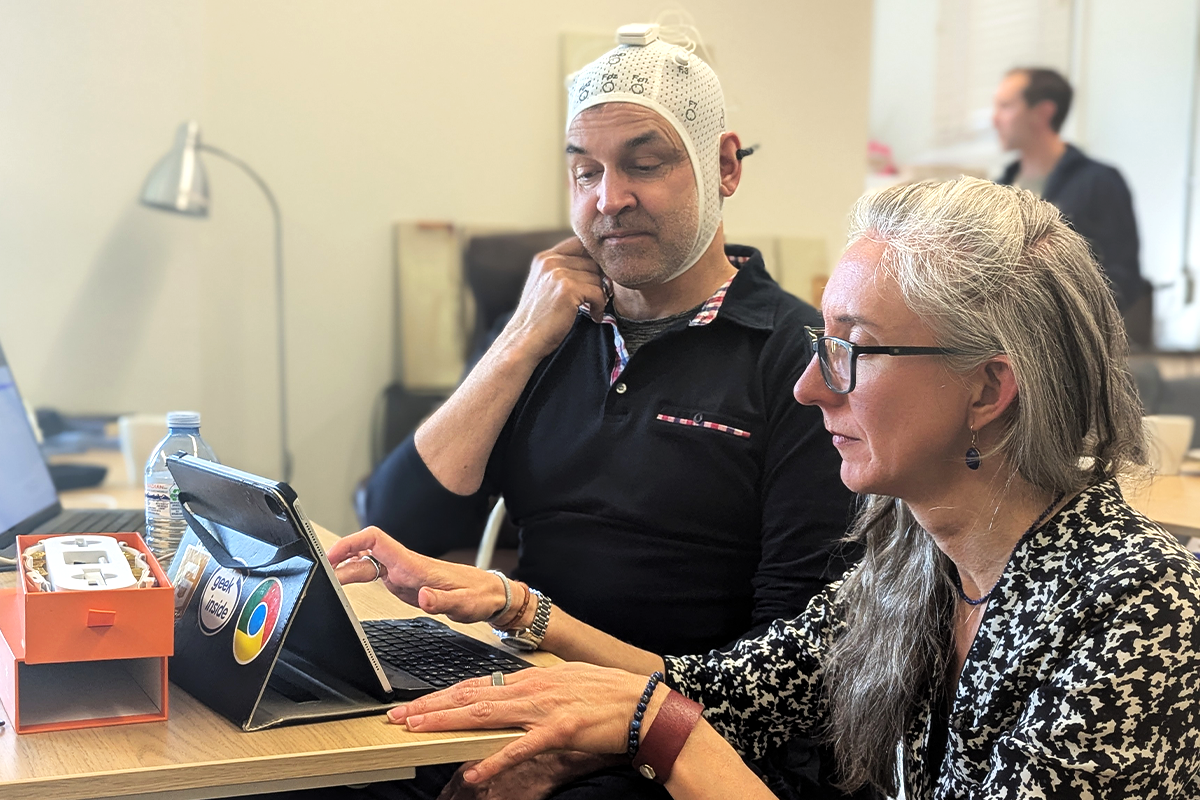
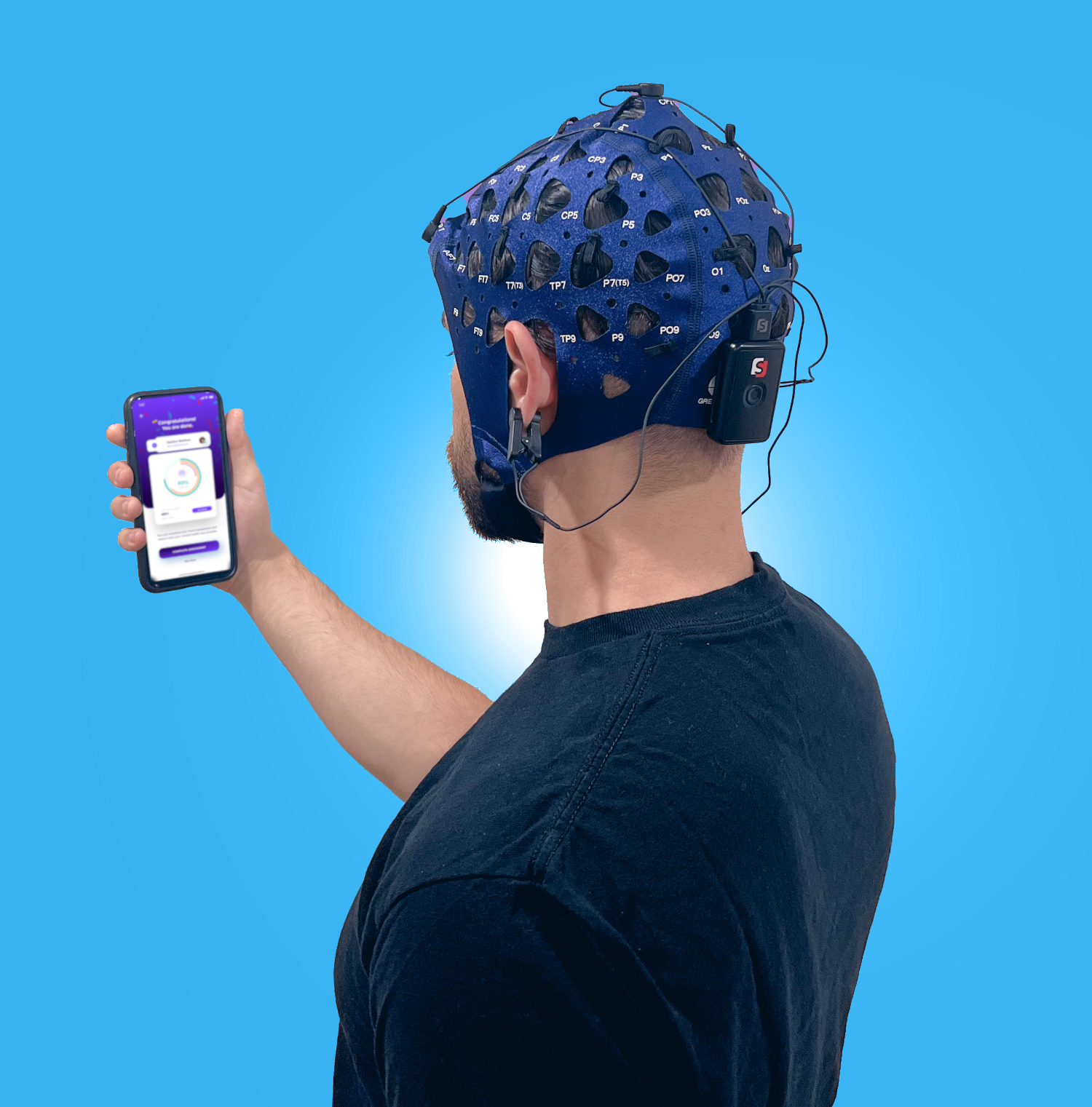
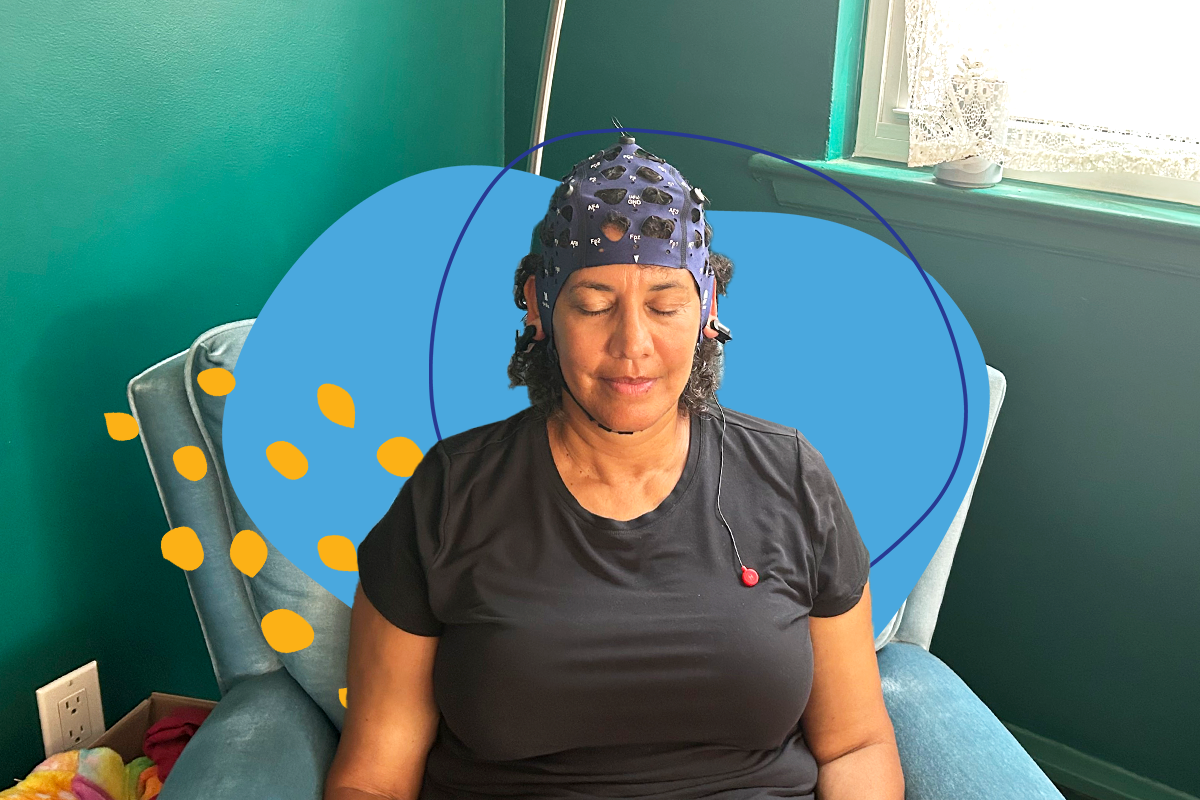
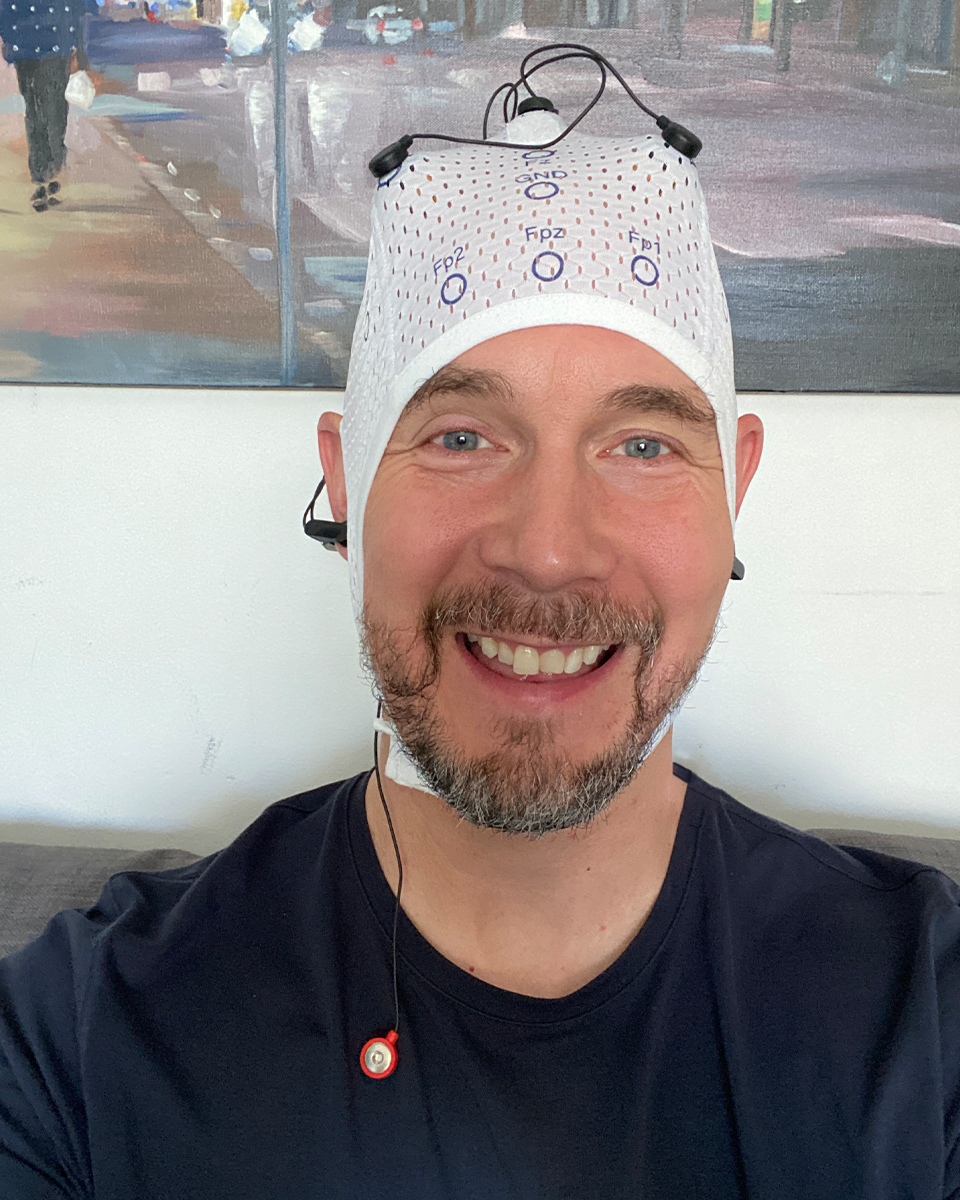
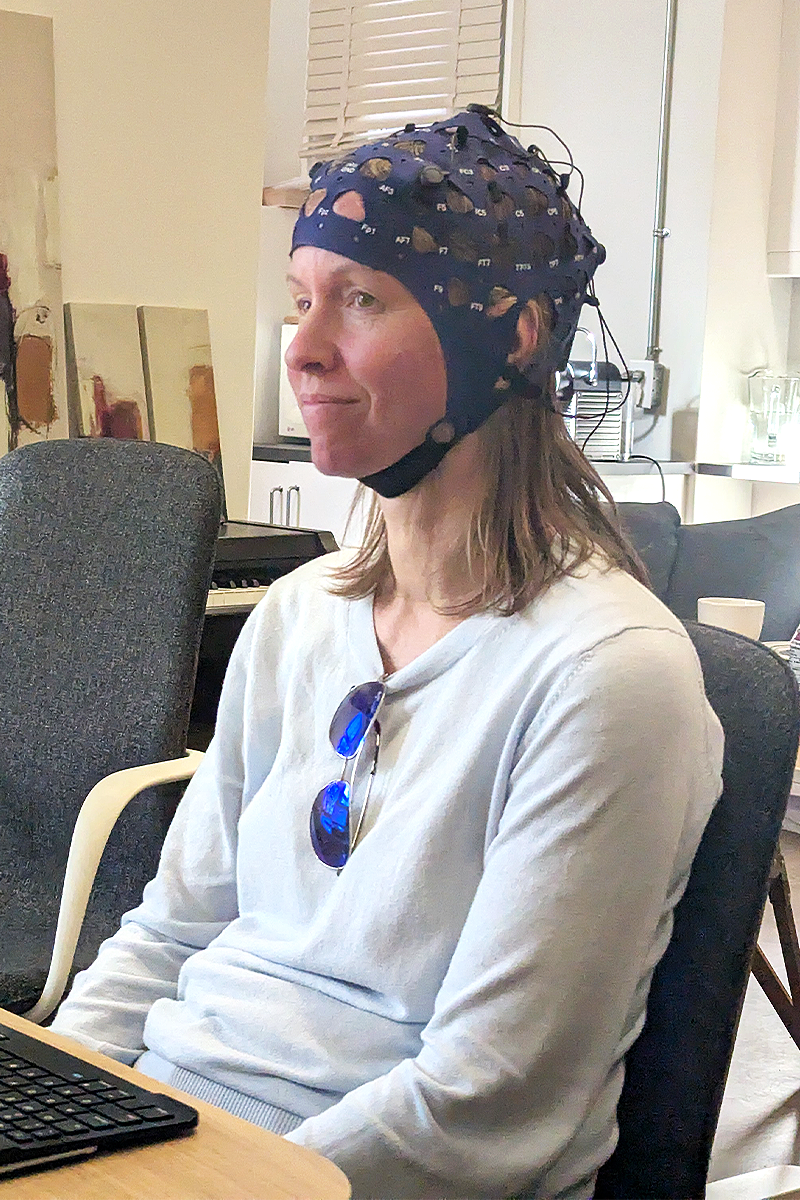
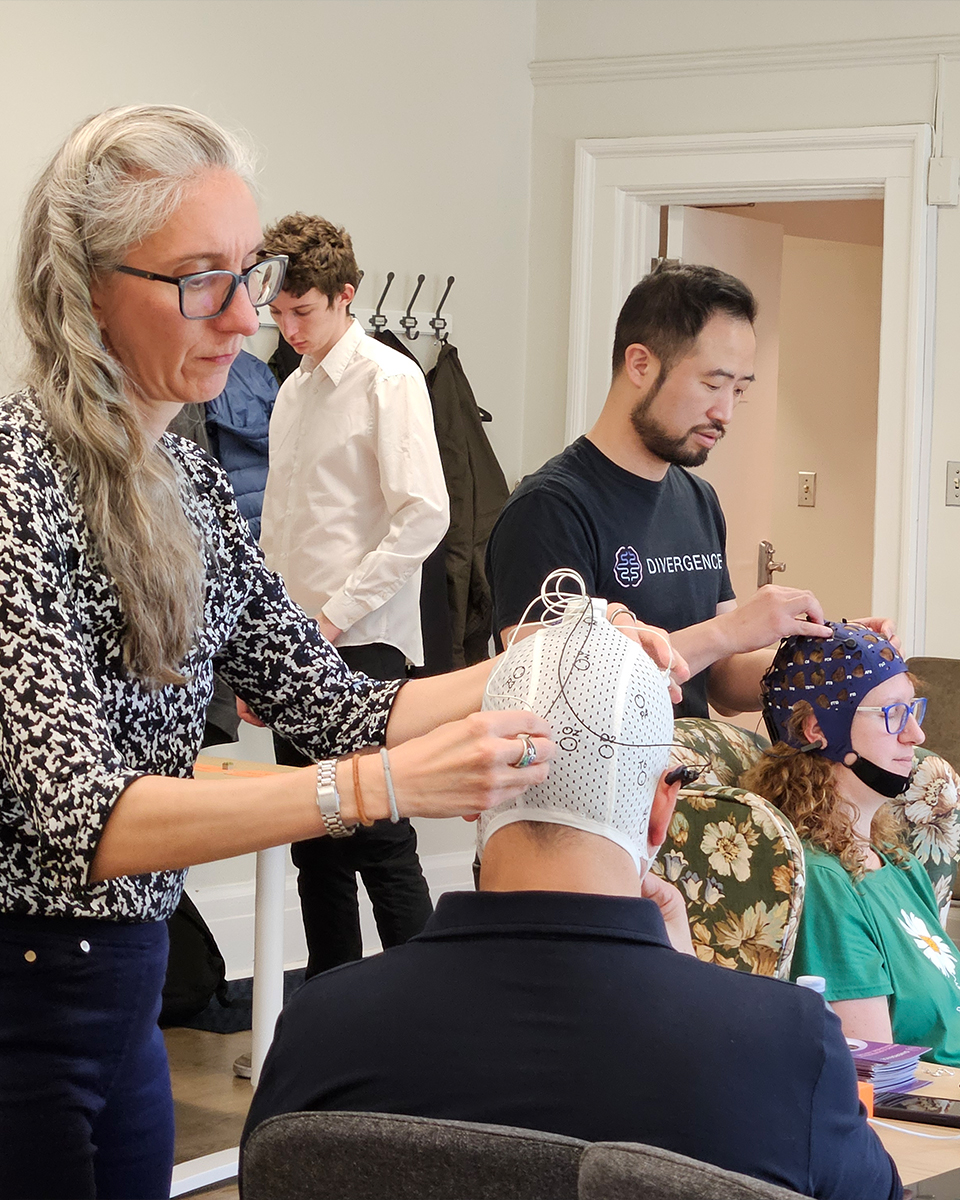
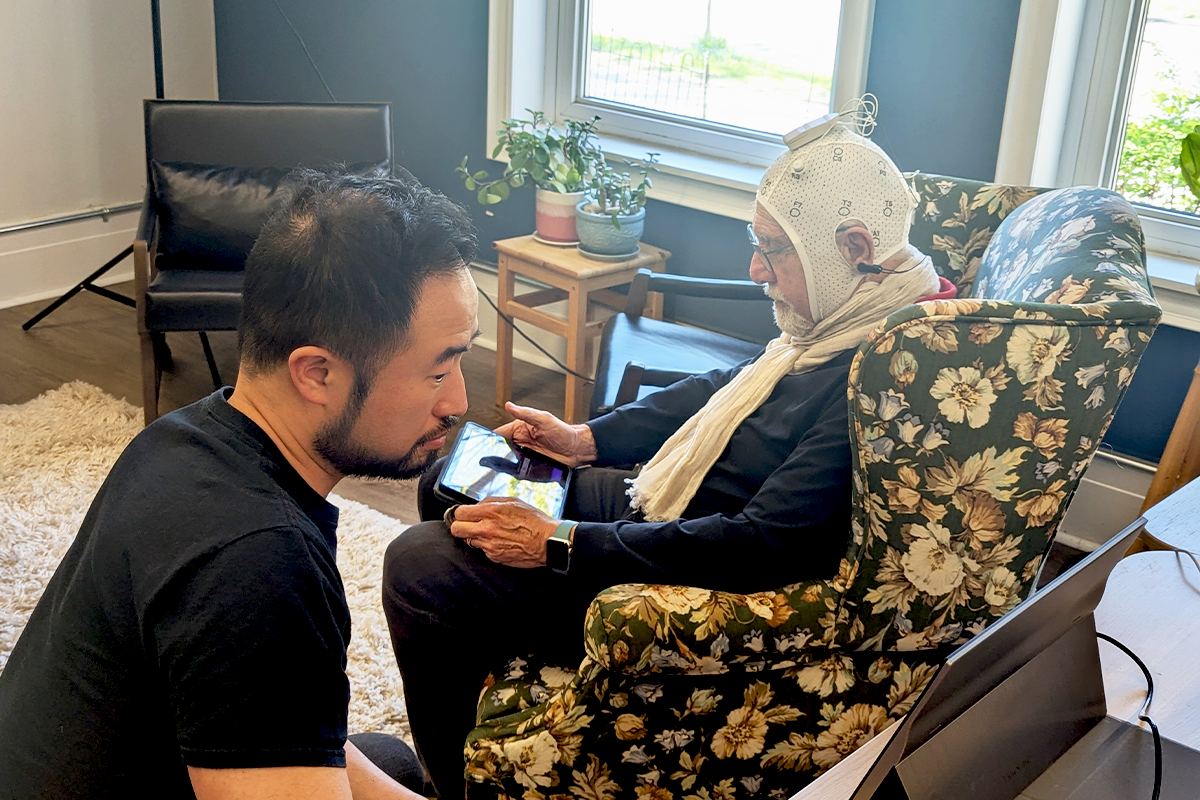
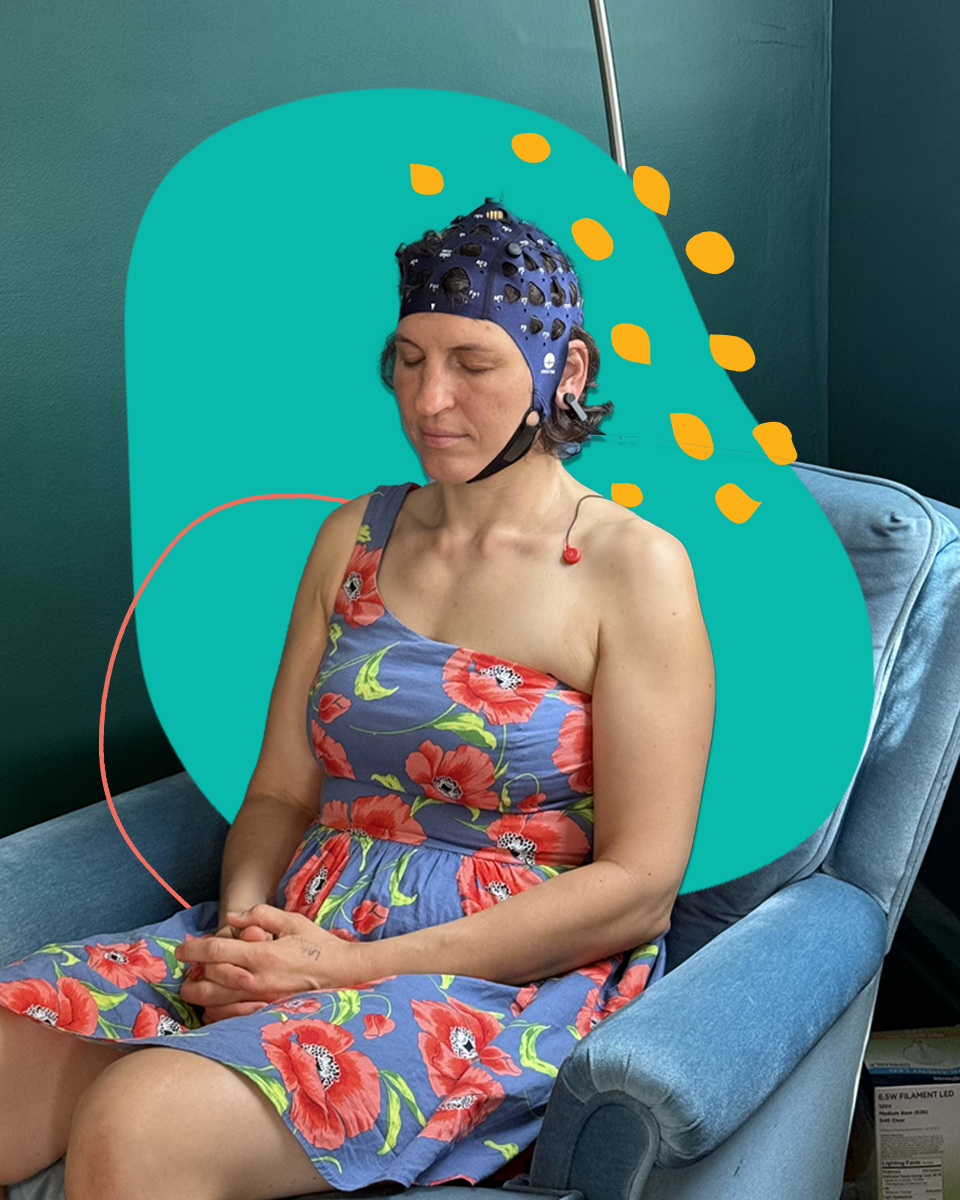
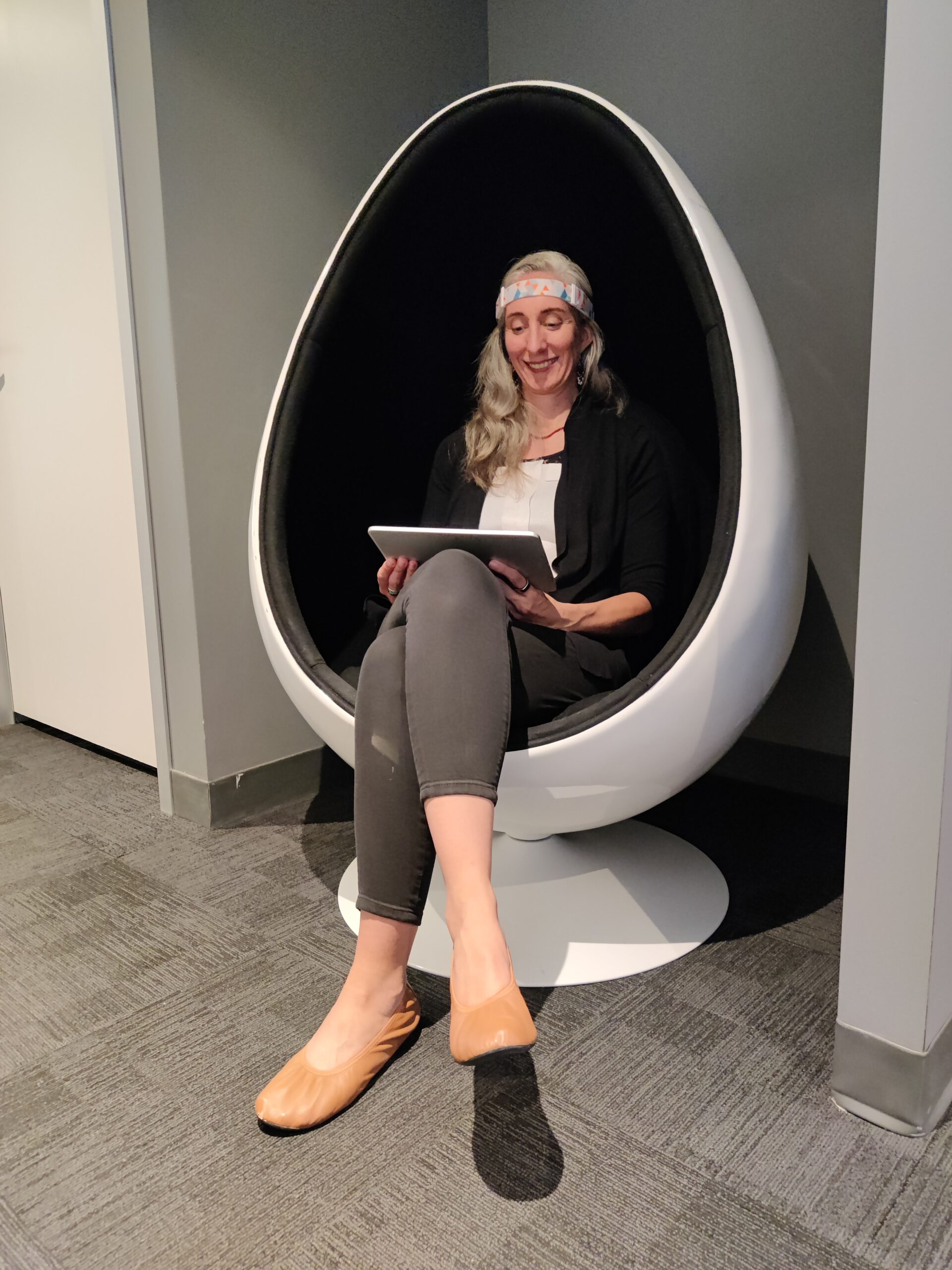
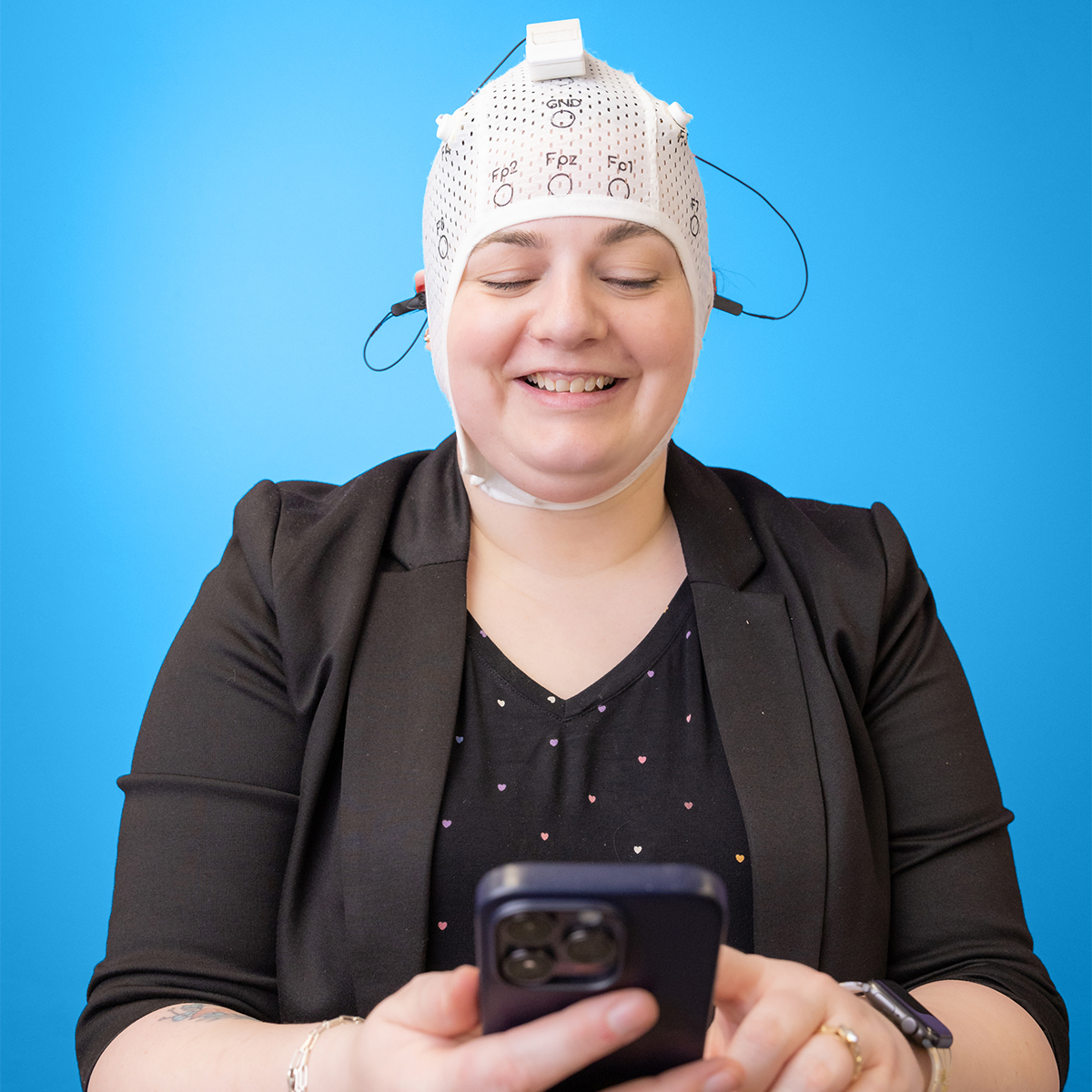
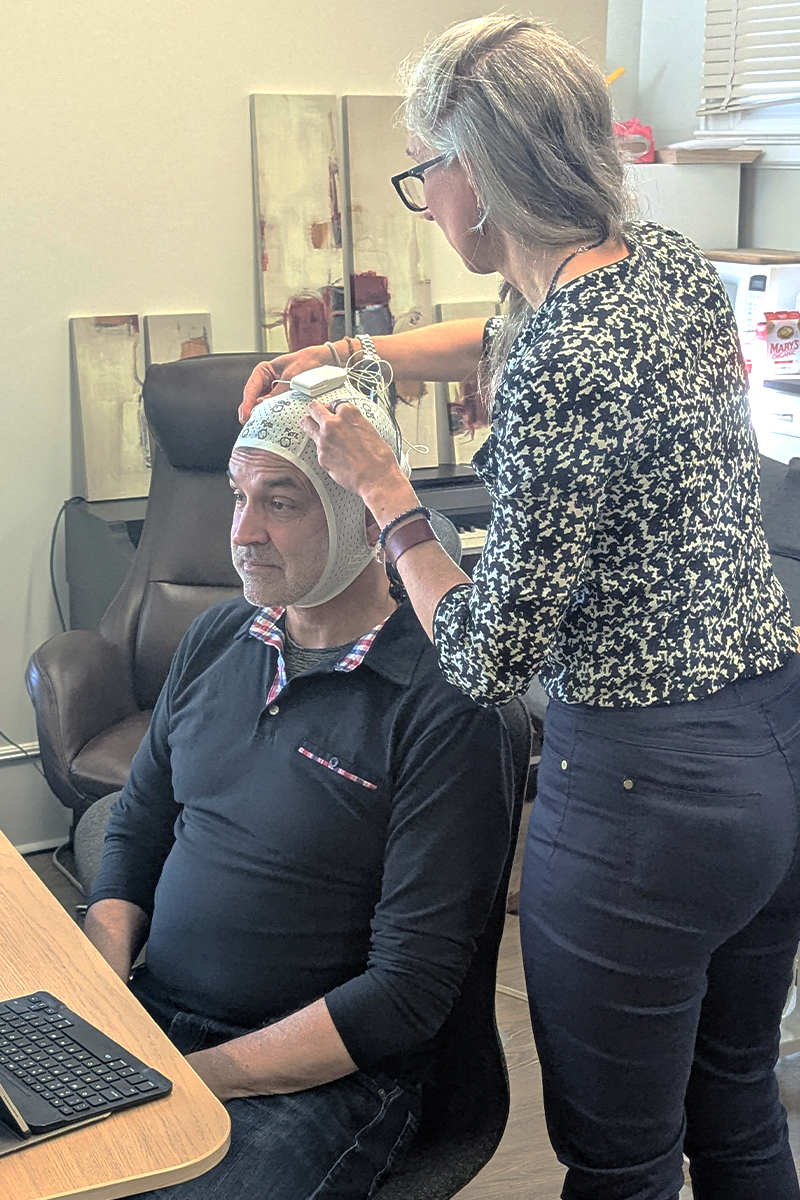
It’s not therapy. It’s not medication. It doesn’t require you to talk about your childhood or take any medication. You sit in a comfortable chair, wear a lightweight sensor cap (no shocks, no gel, no mess), and watch or listen to content on your phone while your brain gets feedback in real time. When your brain produces healthier patterns, the content flows smoothly. When it drifts back to old habits, the content pauses. Over time, your brain learns the new pattern on its own.
This isn’t new science. Neurofeedback has been used for decades by NASA, the military, and elite athletes. What’s new is that it’s now accessible to regular people. People who sit at desks for hours, carry mental loads that never shut off, and deal with a kind of stress that’s different from what athletes face. Less physical. More relentless. And harder to recover from without the right tools.
What a brain assessment reveals

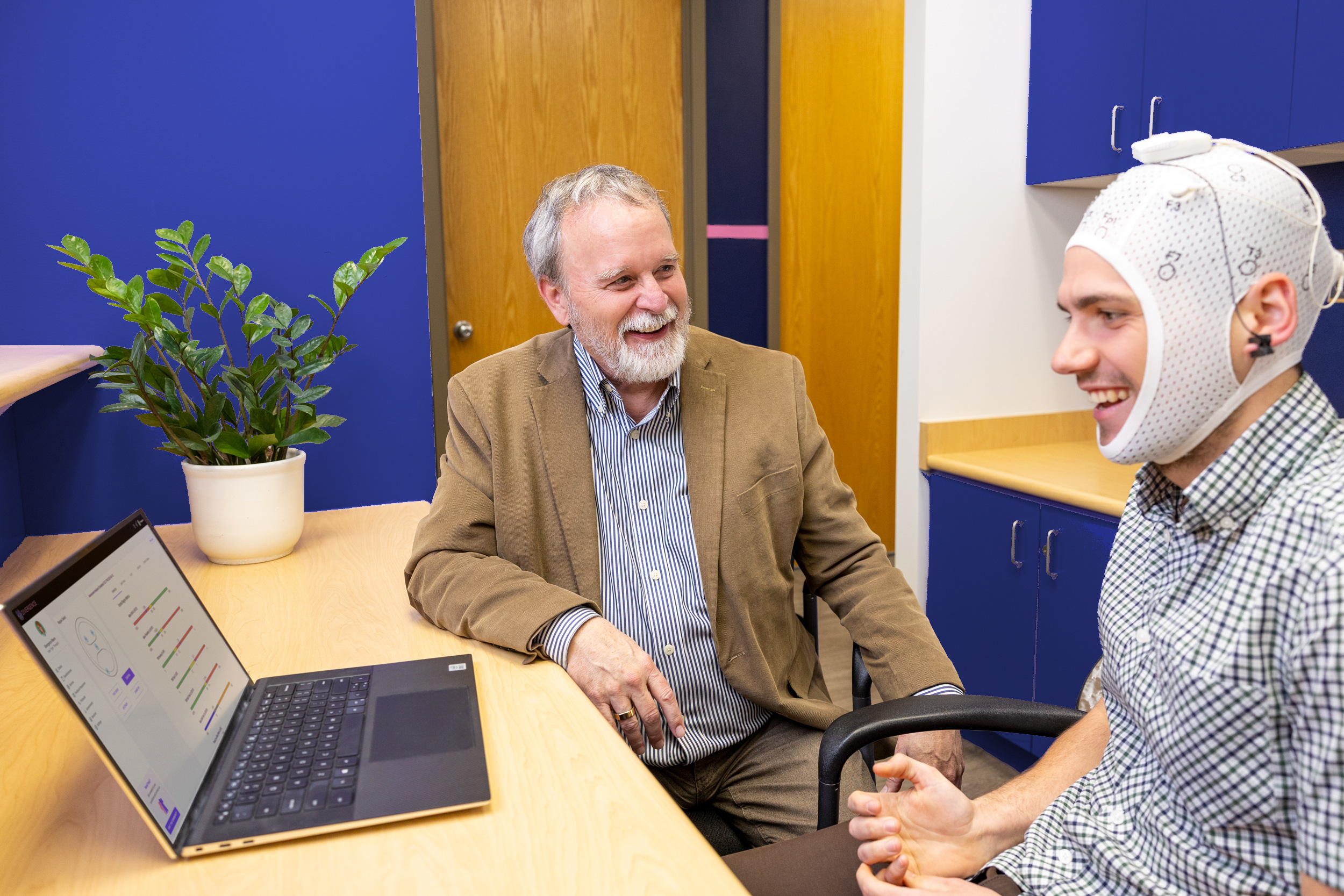
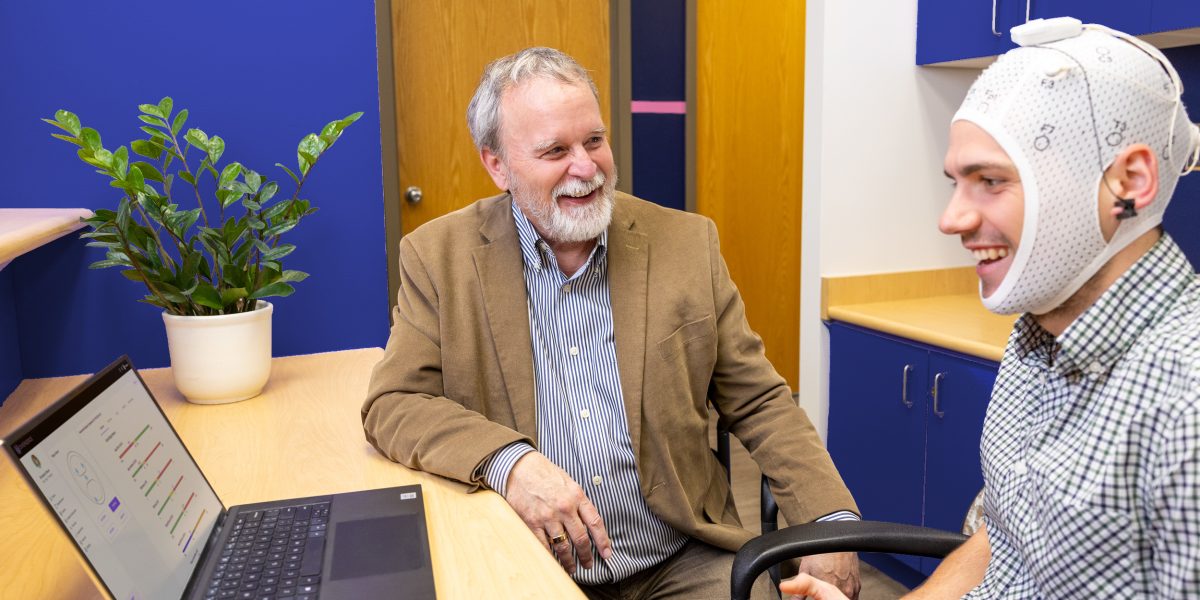
Before any training begins, you start with a brain assessment. This is an EEG-based map of your brain’s electrical activity, and it shows things that no amount of self-reflection or journaling can reveal.
A brain assessment measures how easily you focus, how quickly you shift from stress to calm, and how your brain supports creative thinking and decision-making. It shows which regions are working hard and which ones are underperforming. It shows where your brain is stuck in overdrive and where it’s running low.
Here are a few common patterns:
Overactive high-beta waves often show up in people who can’t switch off. They lie in bed at night with their mind racing, replaying the day or running through tomorrow’s to-do list. Their brain is stuck in alert mode.
Low alpha waves are common in people who’ve lost their ability to find calm focus. They can power through tasks with caffeine and willpower, but they’ve lost that easy, clear-headed feeling of being “in the zone.”
Disrupted delta patterns show up as poor sleep quality. Even when you’re getting seven or eight hours, your brain isn’t cycling through the deep restorative stages it needs to consolidate memory, process emotions, and repair itself. Christopher Palmer’s research at Harvard has shown that sleep deprivation directly damages mitochondria, the energy factories inside your brain cells. Less cellular energy means more fog, more reactivity, and worse decisions.
And here’s what clients consistently say when they see their brain map for the first time: “That explains everything.”
It’s not a diagnosis. It’s a mirror. And for most people, it’s the first time they’ve seen objective data about what’s actually happening inside their head.
How the training works
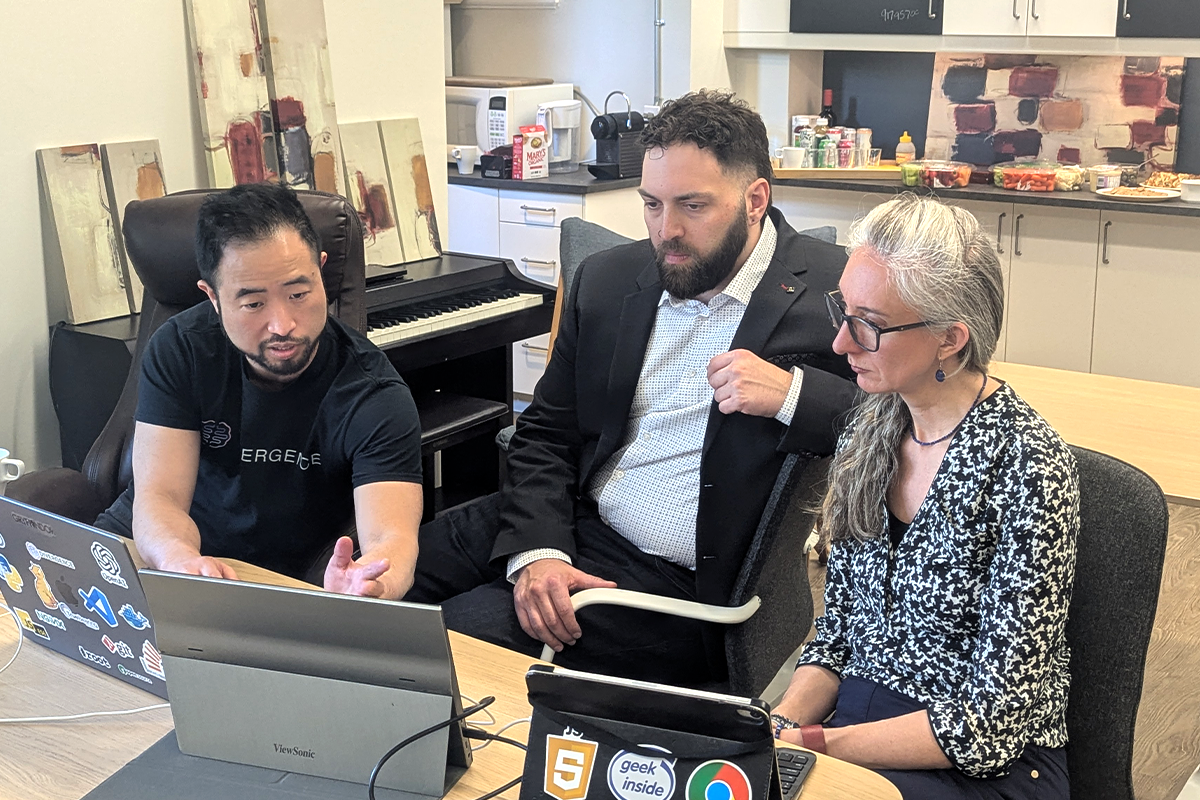
A typical neurofeedback program runs about three months. You do a 10 to 20 minute brain training session at home every day using a portable device, plus a one-hour coaching session every two weeks.
The at-home sessions are simple. You put on the sensor cap, open the app on your phone, and let your brain do the work. Most people do it first thing in the morning or during a midday break. If we are training your brain to relax, the training sessions happen in the evenings or right before bed.
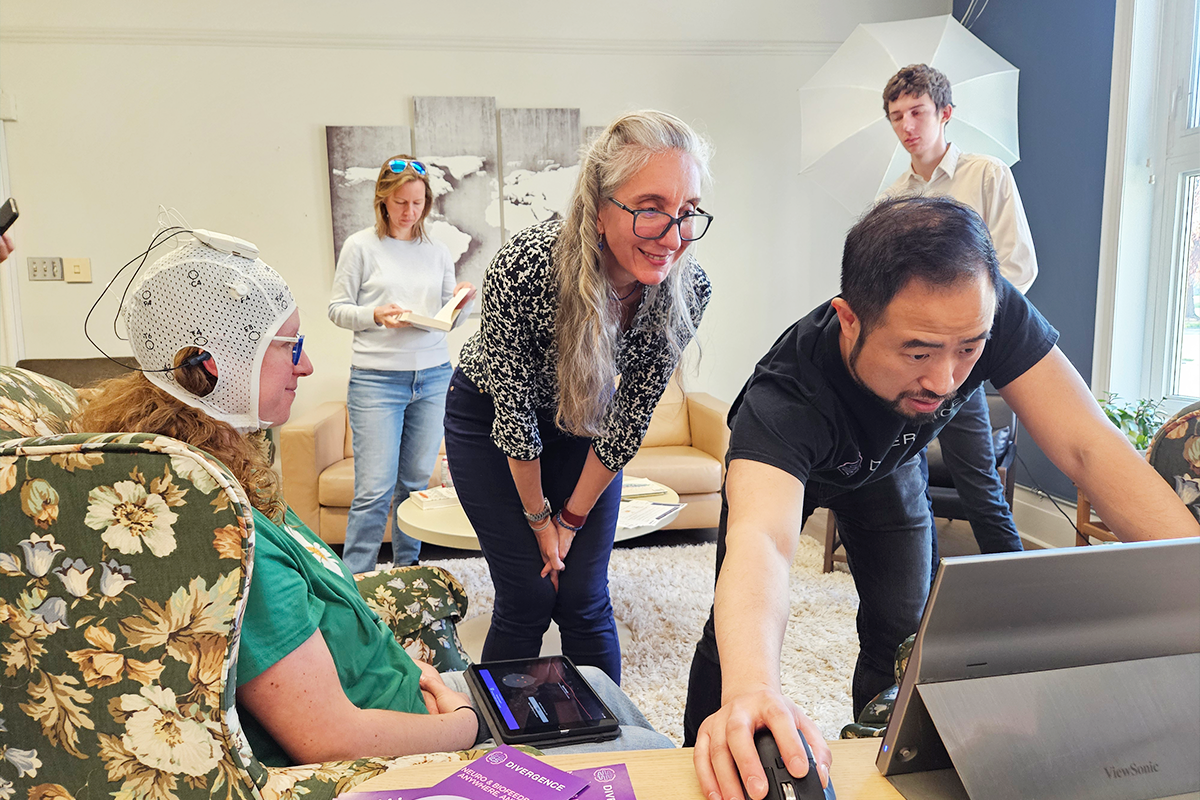
The coaching sessions are where the bigger picture comes in. Because your brain doesn’t operate in isolation. How you sleep, how you eat, how you manage stress, how much you move, what your evenings look like. All of these affect your brain’s ability to change. And so the coaching piece supports the brain training by helping you build habits that create the right conditions for your brain to recover and grow.
What changes first? Almost always sleep. People start sleeping deeper within the first few weeks. Then comes focus and concentration. Then emotional regulation, the ability to stay calm under pressure and not carry the weight of the day home with you.
The science behind this is straightforward. Neurofeedback trains the same brainwave patterns that constitute healthy sleep architecture. It strengthens your prefrontal cortex (the part of your brain responsible for planning, decision-making, and impulse control) and reduces reactivity in your amygdala (the part that triggers your stress response). These are the same changes that neuroscience researchers at Stanford have documented from long-term meditation practice. Neurofeedback gets you there faster, because it gives your brain direct, real-time feedback rather than relying on you to “try harder” at being calm.
Who it’s for (and who it’s not for)
This is for dedicated professionals who want to sustain their energy for all the things that matter in life. Not just work. Their families, their health, their communities.
It’s for leaders who want to think clearly under pressure and still have something left for the people they come home to. It’s for people who’ve tried the supplements, the apps, the sleep tips, the breathing exercises, and hit a wall because they were treating symptoms without understanding what their brain actually needed.
It’s NOT for people looking for a quick fix. Brain training takes consistency. You won’t feel dramatically different after one day of training. But after 20 or more days, the changes are real and they last because your brain has actually rewired itself.
What clients typically report: deeper sleep, sharper focus during the workday, more patience with family, better decision-making under stress, and (this one comes up a lot) a feeling of “getting back to myself.” Not a new version of themselves. The version they remember being before everything got so heavy.
Frequently asked questions
Is neurofeedback safe?
Yes. Neurofeedback is non-invasive and medication-free. It has been used in clinical and performance settings for over 40 years. The sensor cap reads your brain activity, it doesn’t send anything into your brain. There are no known side effects.
How quickly will I notice changes?
Most people notice improvements in sleep quality within the first two to three weeks. Improvements in focus and emotional steadiness typically follow over the next one to two months. The full benefits usually emerge around three months of consistent training.
Can I do neurofeedback alongside therapy or medication?
Absolutely. Neurofeedback complements therapy, medication, and other wellness practices. Many clients work with a therapist and do neurofeedback at the same time. It’s a different modality working on a different level. Think of it this way: therapy helps you process and understand. Neurofeedback helps your brain regulate, so the insights from therapy can actually stick.
Is this covered by insurance?
Some extended health plans cover neurofeedback under paramedical services or wellness spending accounts. Check with your provider. Many clients also use their health spending accounts (HSAs) for the investment.
What happens after the program ends? Do results last?
Yes. Because neurofeedback creates structural changes in your brainwave patterns, the results are lasting. It’s similar to learning to ride a bike. Once your brain has learned the new pattern, it maintains it. Some people choose to do occasional maintenance sessions (a few times a year), but most find the changes hold without ongoing training.
Your brain is doing the best it can with what it’s got
Here’s what it comes down to. You haven’t lost your edge. Your brain is just exhausted from running flat out without the recovery it needs. And no amount of discipline or motivation can override the basic biology of a tired brain.
Neurofeedback gives your brain what it actually needs: real data about what’s happening, and a way to train itself back to balance. It’s not about becoming a different person. It’s about giving your brain the support to function the way it was designed to.
If you’re curious about what your brain data might reveal, book a free discovery call. You’ll learn about the process, ask your questions, and find out if this approach makes sense for you.
You might also enjoy reading Brain Fog Is Not Just in Your Head or How to Improve Cognitive Performance After 40 for more on what science tells us about keeping your brain sharp.