
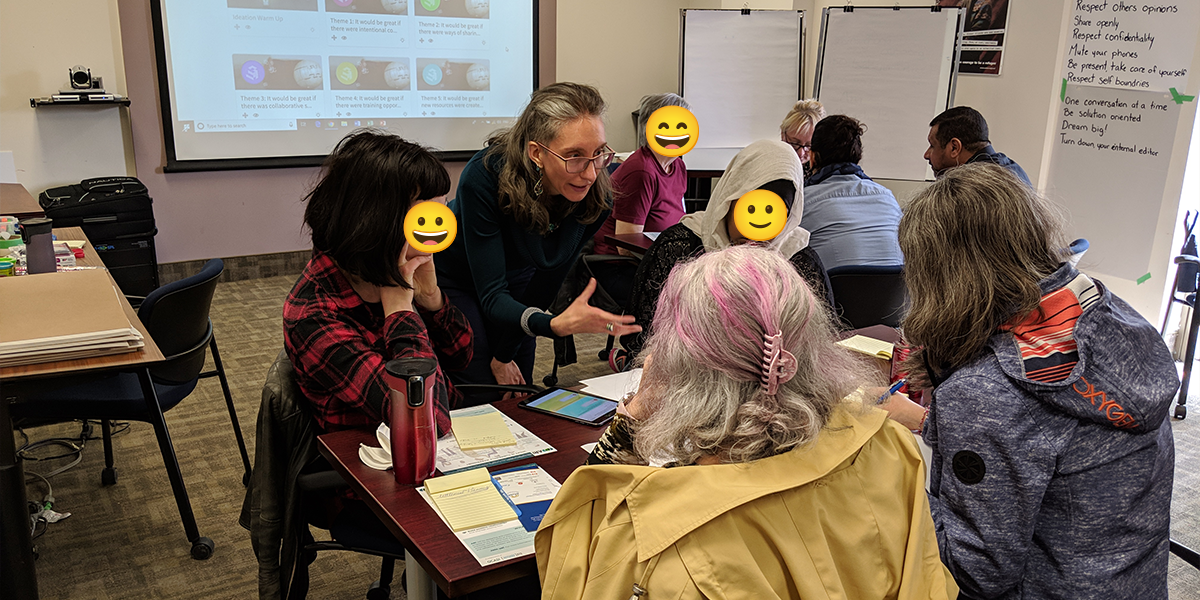
You’ve been to one of those retreats. The company books a nice venue, someone plans a few icebreakers, maybe there’s a ropes course or a trivia game. Everyone has a good time. People say things like “we should do this more often.” And then Monday comes and nothing is different.
The meetings go back to normal. The same people dominate the conversation. The same tensions simmer just below the surface. Whatever felt possible during the retreat disappears within days.
This happens more often than anyone admits. And it’s not because retreats don’t work. It’s because most retreats aren’t designed to change anything. They’re designed to be pleasant. And pleasant is not the same as productive.
A well-designed retreat does something very different. It creates the conditions for honest conversation, builds shared understanding of what’s actually going on (not just what’s polite to say), and produces commitments people follow through on because they helped create them.
Here’s how to design one that actually moves the needle.
When your team needs a retreat (vs. a meeting or workshop)
Not every problem needs a retreat. Sometimes a 90-minute meeting is enough. Sometimes a half-day workshop will do. Retreats are the right tool when you need something that regular meetings can’t provide: time, space, and a break from the daily rhythm that keeps everyone stuck in their patterns.
Signs it’s time for a retreat:
You’ve had a major change. New team members, a restructuring, a leadership transition, a merger. The team needs to figure out who they are now, not who they used to be.
The energy is flat. People are going through the motions. Meetings feel transactional. Nobody brings a new idea because nobody expects it to go anywhere.
There’s conflict that isn’t being addressed. Not the dramatic kind (usually). The kind where people are polite in meetings but complain in the hallway. Where trust has quietly eroded and nobody knows how to talk about it. These are often signs your team is struggling with collaboration.
You’re at a strategic inflection point. New direction, new priorities, a shift that requires everyone to get aligned. Not just informed (you can do that in an email) but genuinely aligned, where people understand the why and have a chance to shape the how. This is where strategic meeting facilitation becomes essential.
Your team is mostly remote. Video conferencing meetings are great for updates and decisions. They are terrible for building relationships, reading the room, and having the kind of messy, creative conversation that leads to real breakthroughs. If your team rarely or never meets in person, a retreat isn’t a luxury. It’s a necessity. The hidden challenges of hybrid work make this even more urgent.
The anatomy of a retreat that works
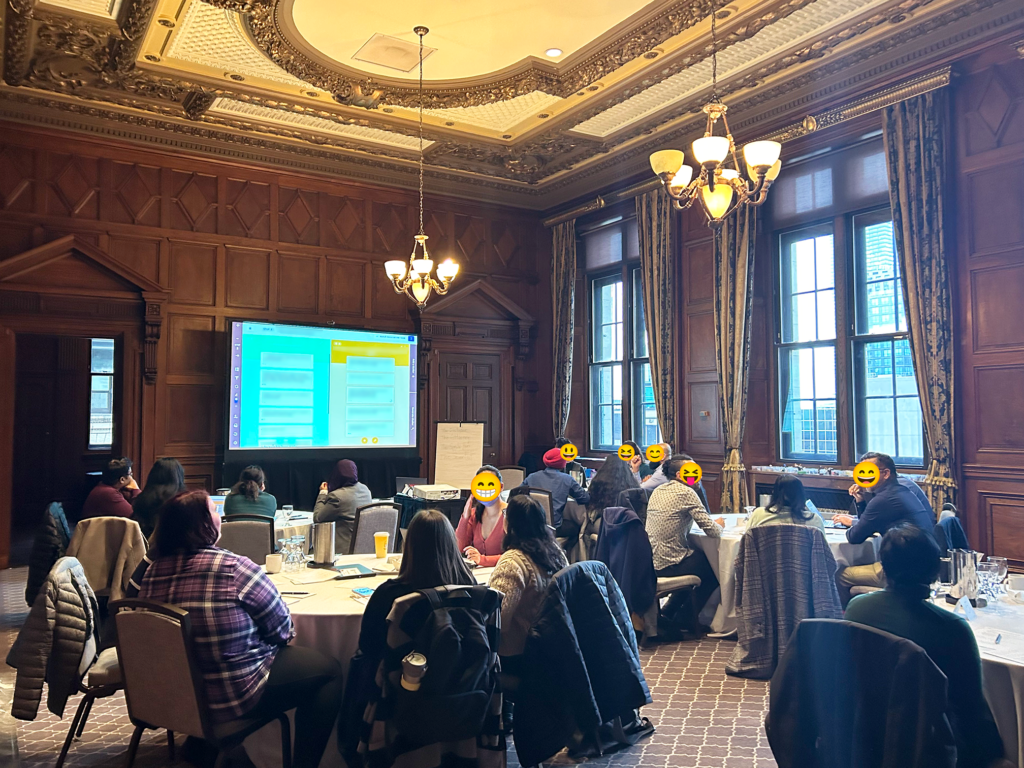
The best retreats follow a pattern, even though each one looks different on the surface. Here’s what separates the ones that work from the ones that feel good but fade fast.
Start before the retreat starts
The most important work happens before anyone shows up. A skilled facilitator will spend time understanding your team’s real dynamics through stakeholder interviews, surveys, or one-on-one conversations. This isn’t a formality. It’s where you uncover the things people won’t say in a group setting. The actual issues. The unspoken frustrations. The hopes that feel too risky to voice.
This pre-work shapes every decision about the retreat design, from the activities to the seating arrangement to the questions that get asked.
Design for the right balance and the right length
Effective retreats alternate between dialogue, reflection, and activity. Too much talking and people zone out. Too much activity and you never get to the substance. The best retreat designs create a rhythm: a meaningful opening that sets the tone, structured conversations that give everyone a voice, creative exercises that get people thinking differently, and reflection time that lets ideas settle.
The length matters too. A half-day retreat can work for a focused conversation or a team that’s already functioning well and needs a tune-up. A full day allows for deeper work, multiple activities, and real breakthroughs. Multi-day retreats (two days or more) are for teams going through significant change or doing serious strategic planning.
Get the leader out of the driver’s seat
Here’s a pattern that kills retreats: the team leader runs the whole thing. They set the agenda, facilitate every conversation, and wonder why people aren’t speaking up. The problem is obvious to everyone except the leader. When the boss is facilitating, people filter. They say what’s safe, not what’s true.
An external facilitator changes this dynamic completely. The leader gets to participate as a team member. The facilitator holds the space, asks the most useful questions, manages the energy in the room, and handles the quiet people and the dominant voices so everyone contributes.
This isn’t a knock on leaders. It’s a structural reality. You can’t simultaneously be in the conversation and managing the conversation. And the team needs their leader present, not performing.
Facilitation techniques that create real engagement
There’s a reason the phrase “team building activities” makes some people groan. Most of them are disconnected from the actual work of the team. They’re fun but irrelevant.
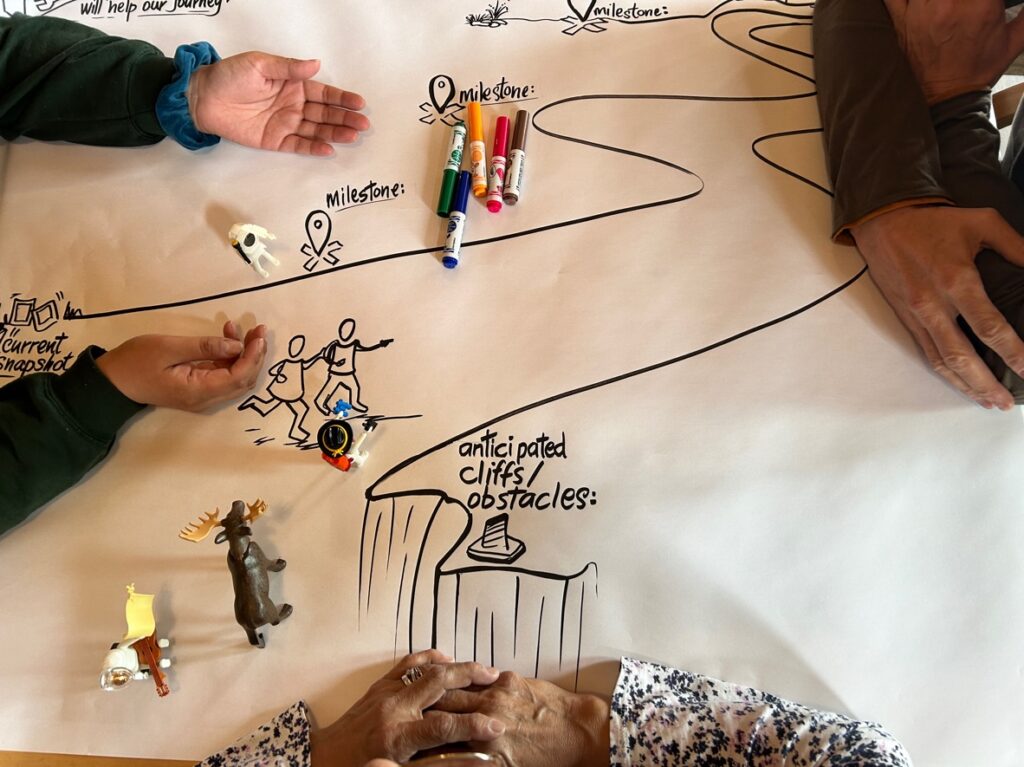
The best facilitation techniques don’t feel like “activities.” They feel like productive yet fun challenges. Engaging and useful at the same time. A few approaches that consistently work:
Opening rounds that matter. Instead of “say your name and a fun fact,” try “share one thing that’s going well on this team and one thing you wish we could change.” It sets the tone that honesty is expected and valued. This works even better when participants are invited to find an image (among a wide variety of images) that actually represents the one thing they wish could change or improve.
Structured dialogue for difficult topics. When a team needs to address something sensitive (a conflict, a failed project, a trust issue), free-form discussion usually goes nowhere. Structured formats give people a framework that feels safe enough to be honest. Focused brainstorming sessions that allow for anonymous contributions work really well. Another approach involves doing full go arounds: Each person speaks. Each person listens. The facilitator manages the flow.
Creative problem-solving methods. Approaches like FourSight and design thinking break people out of their default thinking patterns. They separate idea generation from idea evaluation (which is where most teams get stuck, because the same person who shoots down ideas in a meeting will do it in a retreat unless you design around it).
Handling the room dynamics. In every team, some people take up a lot of space and others hold back. A good facilitator knows how to draw out the quieter voices (without putting them on the spot) and channel the louder ones (without shutting them down). This alone can transform how a team functions, because the best ideas are often sitting with the person who never speaks up.
Virtual and hybrid retreats. Yes, they can work. No, they shouldn’t look like a Zoom meeting with a better agenda. Virtual retreats need shorter sessions spread over multiple days, more breaks, different digital tools for collaboration, and activities designed specifically for screens. Trying to replicate an in-person retreat on video is a recipe for Zoom fatigue.
After the retreat: making it stick
This is where most retreats fail. Not during. After.
Research on behavior change is clear: what happens in the first 72 hours after a new experience determines whether it becomes a lasting change or a pleasant memory. The same is true for retreats.
Before people leave the room, they should have:
Clear commitments. Not vague intentions (“we should communicate better”) but specific actions with names and timelines (“Priya and Marcus will redesign the project update format and share it by next Friday”).
A shared document. A team charter, a set of agreements, a strategic plan (whatever fits the retreat’s purpose) that everyone contributed to and everyone has access to.
A check-in structure. How will the team revisit these commitments? Monthly? Bi-weekly? The cadence matters less than the fact that it exists and someone owns it.
And here’s one more thing most people don’t think about: schedule a follow-up with the facilitator. Not another retreat. Just a check-in, maybe 6 to 8 weeks later, to see what’s held, what’s slipped, and what needs adjusting. It’s a small investment that dramatically increases the odds of lasting change. See how one team used a structured follow-up process to move from silos to shared momentum.
Frequently asked questions
How far in advance should we plan a team retreat?
Ideally, four to five months for a full-day or multi-day retreat. This allows time for pre-work (stakeholder interviews, surveys), venue booking, and thoughtful design. A half-day session can sometimes come together in four to six weeks if schedules allow.
What does a facilitator charge for a full-day retreat?
It varies depending on the complexity, group size, and pre-work involved. Most experienced facilitators charge between $7,000 and $16,000 for a full-day session including design and preparation. The investment typically includes pre-retreat interviews, custom design, facilitation, materials, and post-retreat follow-up. It’s worth asking what’s included before comparing prices.
How do you handle sensitive topics during a retreat?
Through structure, ground rules, and skilled facilitation. Before sensitive conversations, we establish agreements about confidentiality and how people will engage. We use formats that give everyone equal voice and prevent any one person from dominating or shutting down the conversation. And we read the room, because sometimes the most important thing a facilitator does is slow down and name what’s happening in the moment.
Your team already knows what needs to change
Here’s something that might surprise you. In almost every team retreat, the team already knows what’s needed. They know the real issues. They know what’s not working. The problem isn’t awareness. It’s that they don’t have the space, the structure, or the permission to talk about it honestly.
A well-designed retreat gives them all three. And when that happens, teams don’t just bond. They move.
If you’re thinking about a retreat for your team and want to explore what might work, book a discovery call. We’ll talk about your team, what’s going on, and whether a retreat (or a different format) is the right next step.